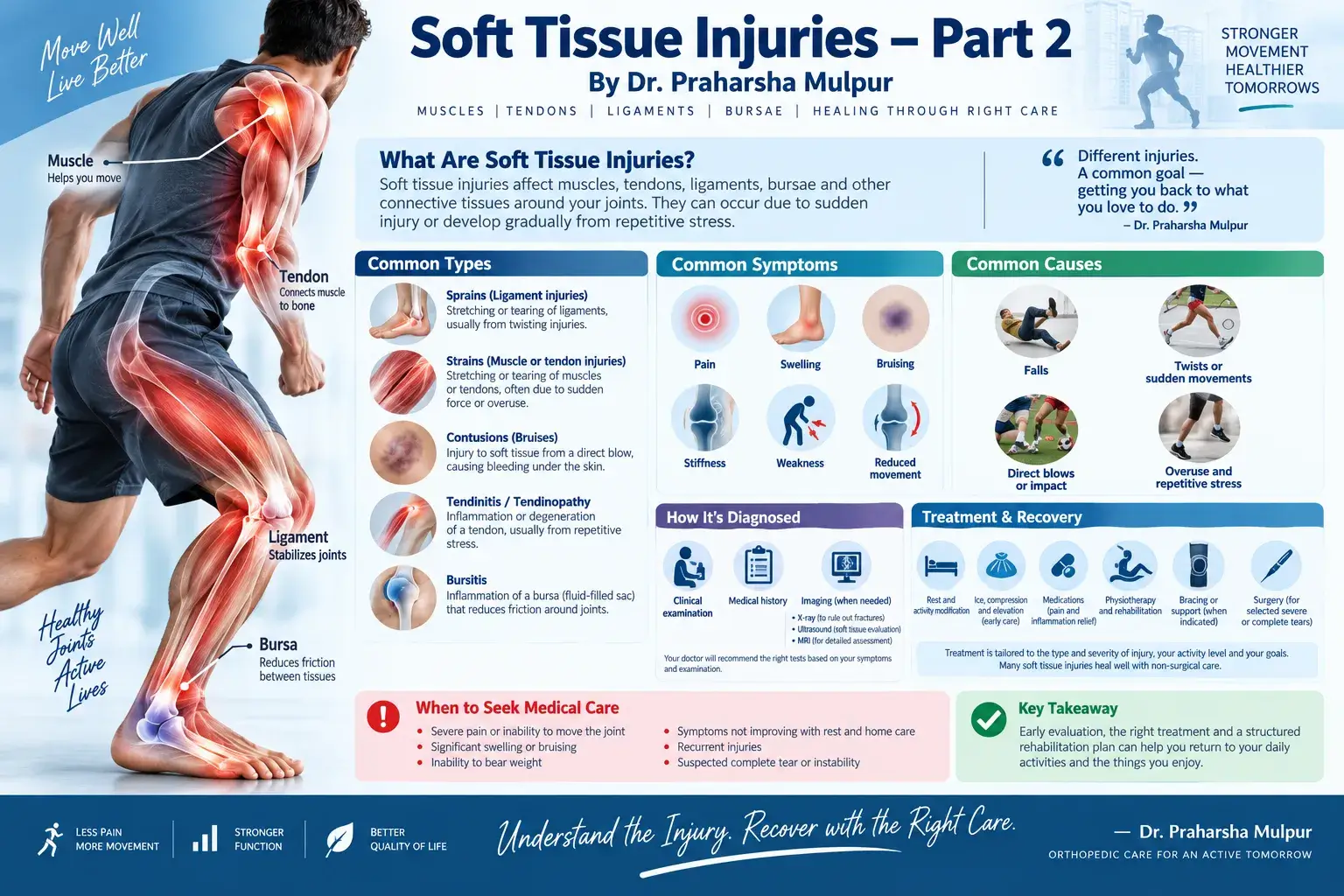
Soft Tissue Injuries – Part 2 by Dr. Praharsha Mulpur
Soft Tissue injury treatment
Injuries to the soft tissues are known as soft tissues injuries. Muscles, tendons, ligaments are the soft tissues that are often prone to injuries due to excessive usage, strain, stress and repetitive movements of the joints such as shoulder, elbow, ankle and foot joints. In most of the cases, sudden injury or pain may result due to sudden abnormal or awkward movement of joints.
What is a stress fracture?
Excessive pressure, strain, force and usage may result in a stress fracture. It is a small crack or fracture in the bone. It mostly occurs in the weight bearing bones of the body – such as feet, legs, hip joint and knee joints. These are the weight bearing bones of the body. People who involve in excessive physical activity, sporting activity or any other type of physical work or laborious work are prone to stress fractures.
Stress Fracture (Soft Tissue Injury Treatment)
To address this type of fractures, one must stop the activity that causes the fracture, elevate the affected area, use pain medication and apply ice. The other treatment modalities that can be continued until you get relief may include minimizing pressure, force and stress on the affected joint, ceasing weight bearing activity, using shoe inserts, braces, casts and taking rest. In some cases, carelessness may lead to full blown cracks and fractures if small and simple crack progresses to a complete break. If this happens, surgery may be required.
What is bursitis?
There is a shock-absorber between the bones and the joints that connects two bones, muscles and tendons. It is a fluid-filled sac. Any injury, inflammation or infection of this cushion like sac may cause inflammation. It is known as Bursitis. It mostly happens due to overuse injury or direct injury to the joint. Bursitis mostly affects Hip, shoulder, knee (most commonly), elbow, foot and ankle.
What is tendonitis?
A band of soft tissues that connects muscles to bones are called tendons. Tendonitis is the most common type of soft tissue injury. It occurs when there is an injury or inflammation in the tendons. In other words, it is an inflammation of the tendons. The soft tissues – such as tendons when subjected to repetitive motion due to overuse – tendonitis may result.
Repetitive motions in sports such as badminton, shuttle, tennis, golf and others may trigger injury and inflammation. The tendonitis is thus named after the sports that trigger it – such as jumper’s knee, Golfer’s elbow, swimmer’s shoulder, and tennis elbow. Tendonitis commonly affects wrists, hand, elbow, knee, hip, shoulder, ankle and foot.
Soft Tissue Injury Treatment (Tendonitis)
If you have inflammation, pain and swelling, then you should first apply ice. You can do this immediately after the injury. Even cold compresses, elevating the affected joint, using anti-inflammatory medicines and taking rest can help in alleviating joint pain and inflammation. Orthopedic doctors recommend you to see a physiotherapist for stretching and strengthening exercises to prevent further injury to the joint. In some cases, if the pain becomes unbearable, doctors may give steroid injections. If a tendon is completely torn, surgery may be recommended.
Soft Tissue Injury Treatment
The first line treatment for getting relief from inflammation and other symptoms is taking anti-inflammatory medicines to relieve pain and reduce inflammation. Orthopedic doctors prescribe pain-relieving medicines and recommend application of ice to reduce swelling. Surgery is very rarely recommended. Physicians also suggest taking rest, keeping the affected joint elevated and using compressions as the first treatment modality. Doctors also prescribe antibiotics if they get a clue of infection in the affected joint.
Bottom Line
Both non-athletes and athletes share many similarities in soft-tissue injuries. If you have severe pain, swelling and inflammation due to a soft tissue injury then meet Dr. Praharsha Mulpur for a prompt and effective treatment.
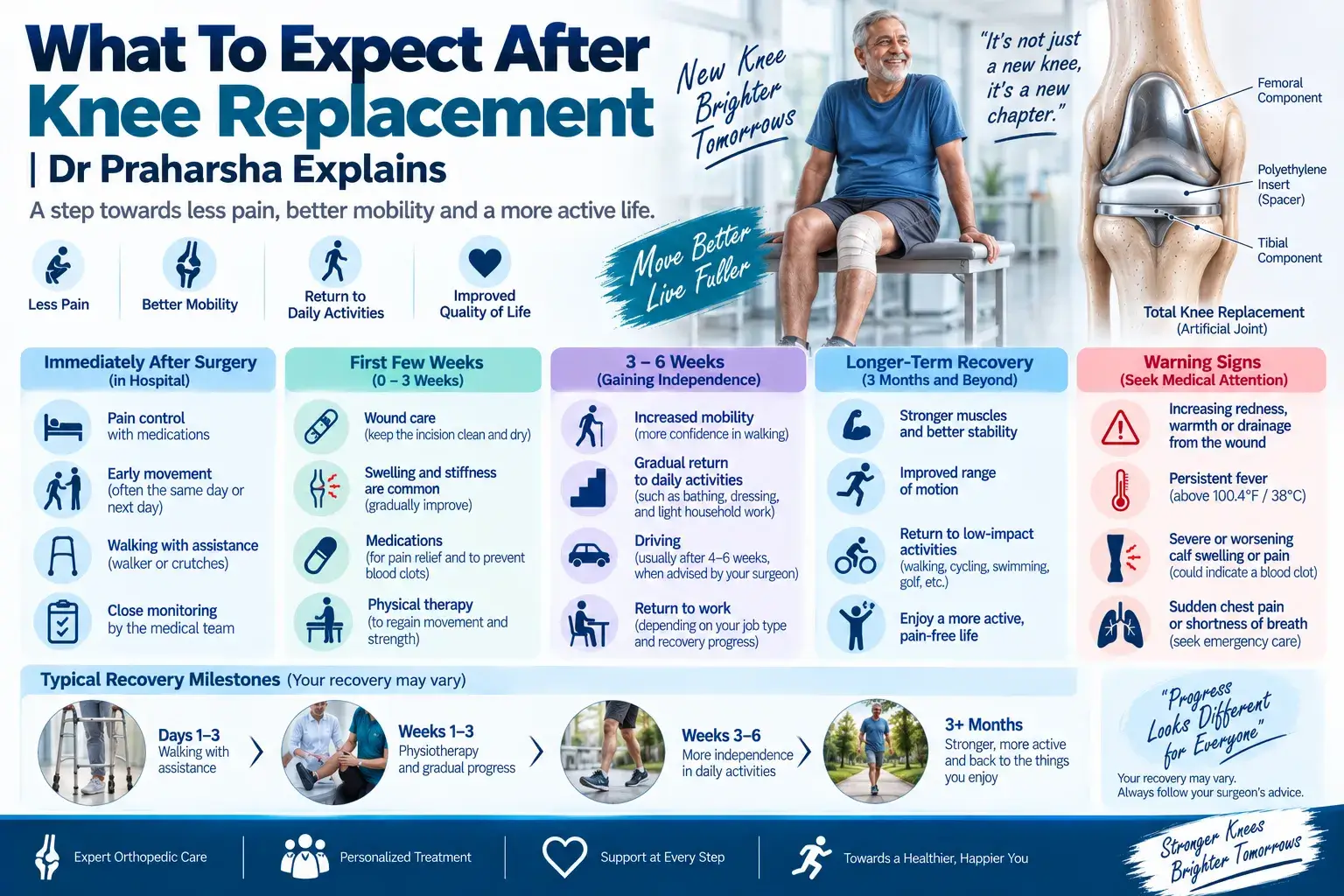
What To Expect After Knee Replacement | Dr Praharsha Explains
Care After Knee Replacement | Dr Praharsha
Care After Knee Replacement: Many people have these questions in their minds – What to expect after 3 months and after 5 months following knee replacement surgery. A majority of the patients recover after 3 months – and if it is a case of robotic knee replacement the recovery time is quite shorter. Nearly about 90% of the patients recovery almost 100% after 5 months following knee replacement. However, the recovery time may extent up to 6 months or longer in some cases. People with comorbid conditions may take longer time to recover. Older patients, smokers and individuals with other medical conditions may take longer time to heal. Recovery is faster in some people who perform knee joint and muscle strengthening exercises while they prepare for the surgery.
3 months after total knee replacement
Most people enjoy their routine activities such as walking comfortably, bicycling, playing games and even dancing at this stage after their knee replacement. You can also able to do a complete range of motions in your knee. Even with normal routine and recreational activities you don’t have any pain at all. However, the complete recovery still depends on your commitment and rehabilitation.
What not to do after knee replacement?
Don’t use bathtubs or slippery bathrooms because if you sit and bath it will be difficult for you to safely get up from there. Therefore, prefer bathroom with rough surfaces and do not try to reach to anything you need by bending or squatting even if you are in sitting position.
Forget about lifting weights and heavy stuff such as grocery bags or laundry or tool boxes, large pets and garbage bags. This will put excess stress on your knees.
What to wear after knee replacement surgery?
Wear comfortable footwear and shoes with non-skid soles. It is very important to wear footwear that provides additional friction on surfaces with anti-skid properties. Avoid wearing flip-flops as well. Avoid walking on wet and slippery surfaces. If you are new to a place then prefer walking slowly.
Equipment needed after knee replacement?
Your orthopedic surgeon may instruct you to use supportive devices that include canes, crutches and walkers. As long as your doctor recommend you to use assistive devices such as walkers use them. When you stand up on both legs use crutches and walker that help you to stand up. As far as driving is concerned ask your orthopedic surgeon about when can you start driving. Usually, you may have to wait for up to 5 to 6 weeks to resume driving for Care after knee replacement.
Sleep position after knee replacement?
Don’t bend your knees while sleeping or taking rest or when lying down. Taking pillow under your knees by bending them to support is also not recommended while taking rest or sleeping. It is better to keep your knee straight while you take rest or if you want to raise or elevate your leg.
How to take care of your new knee joint?
. Don’t sit in the same position for long – say for up to an hour or more – rather prefer getting up in between. Take breaks from sitting positions and long standing. Use sofas and chairs with armrests and a straight back. Don’t use rocking stools or rocking chairs or sofas and also chairs and stools without support and that are low.
If you are sitting in a chair or bed or sofa – don’t stand up abruptly from your sitting position. Take the support of armrest or bed support and then slide towards the edge and then get up. You can take the support of arms of the chair or walker or crutches to get up need Care after knee replacement.
When you are getting dressed
Don’t bend too much to dress and undress. Make yourself comfortable by sitting on the bed to get dressed without bending too much. Don’t dressed up while standing. While removing pants or clothes remove them first from the leg side that didn’t have surgery and from the surgery side last. While putting on pants and socks use the leg that has surgery done first.
Be Careful While Using Stairs
Care after knee replacement What precautions should you take as a part of care after knee replacement? Do not take long flight of stairs for up to two months after knee replacement. Use banister or side railing whenever you step up or down stairs. Do not try to move upstairs and downstairs as usual but take steps slowly until you are in complete control of your walking. This is important for your muscles to develop power and endurance. Use the leg that did not have surgery first while going upstairs. While getting down, first step with the leg that did have surgery.
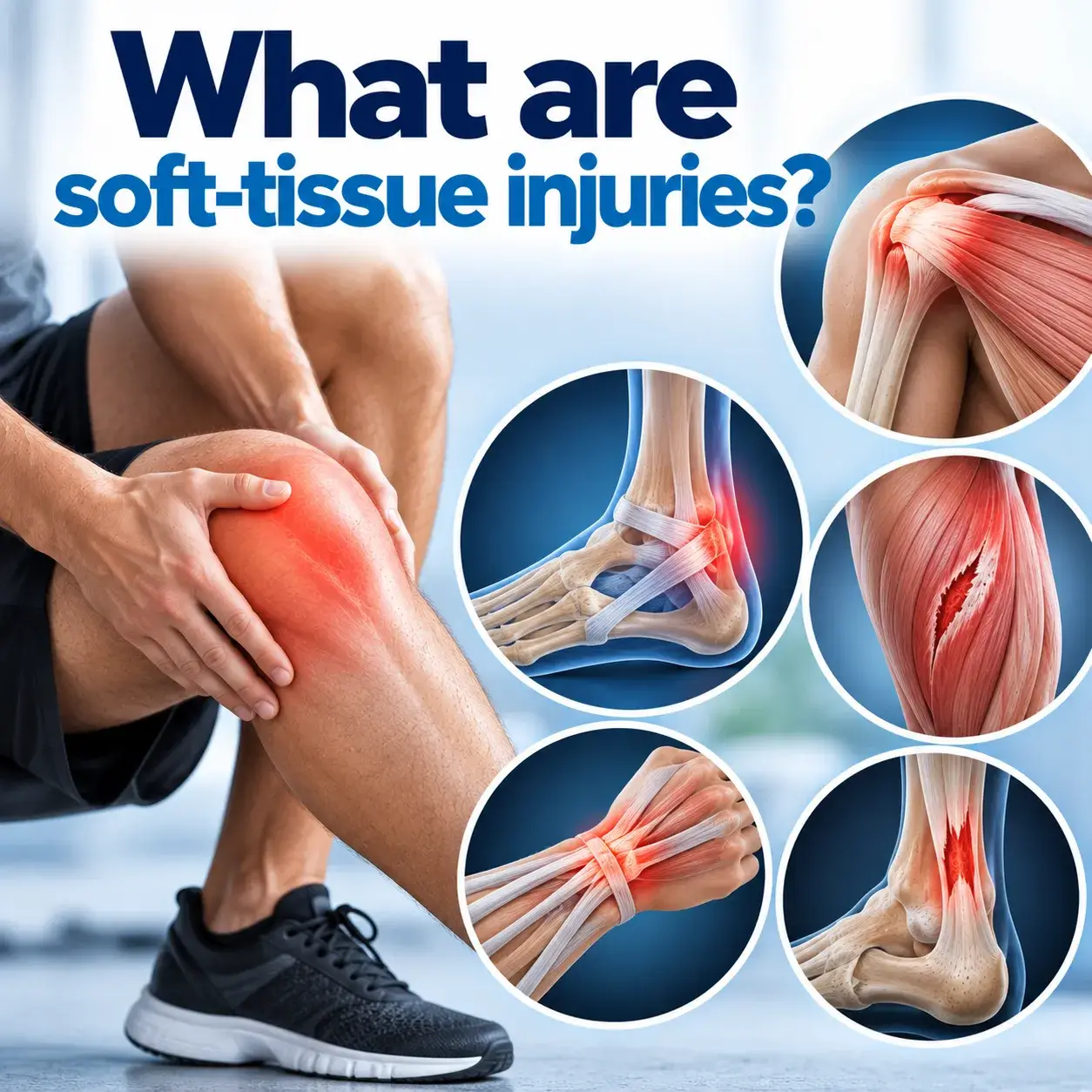
What are soft-tissue injuries?
Soft Tissue Injury Types | Symptoms | Treatment by Dr. Praharsha Mulpur
Ligaments, tendons, and muscles are the soft tissues that support the bones of your joints. Any damage to these structures may result in soft tissue injury.
Soft tissue injuries can range from mild to moderate – and, in some cases, severe. If you develop soft tissue injury, you will experience mild to moderate pain, inflammation, bruising, and swelling. In severe cases, the pain, swelling, and inflammation are severe. It happens when there is damage caused to the soft tissues that support bones and cartilages of the joints. The symptoms related to soft tissue injuries may depend on the nature and type of injury.
Soft Tissue Injury Types
The following is the classification of soft-tissues injuries:
- Sprains
- Strains
- Bruises (contusions)
- Bursitis
- Tendonitis
- Stress injuries
What is a sprain?
A sprain is a stretch or a partial tear to a ligament. When you turn suddenly or wrench, a strain occurs. Ligaments are supportive connective tissues that keep bones together by stabilizing and supporting the body’s joints. For instance, Ligaments in the knee region connect your thighbone with the shinbone (tibia) and help you walk. Sprains commonly occur in the following joints in your body: ankles, knees, elbow, and wrists.
While walking if your ankle suddenly experiences severe tension or pressure when your foot turns inward, you will experience severe pain. This is a case of a sprained ankle. This usually happens from a sudden twist. Similarly, a wrist sprain develops if you fall on an outstretched hand.
For sprains occurring due to excessive pressure and a partial tear in the ligaments, R.I.C.E. is the preferred treatment modality. However, for a completely torn ligament, surgery may be needed.
What is a strain?
Tendons attach muscles to bone. They look like fibrous cords. An injury to a muscle or tendon that may result due to overuse, excessive force, pressure, or stress. It can be as simple as a stretch of a muscle or tendon or can be a severe one involving a partial tear or complete tear of a tendon or muscle. A strain causes these symptoms – moderate to severe pain, swelling, muscle weakness, cramping, muscle spasms, and inflammation. The hamstring is a typical example of strain. Strains mostly occur in the leg or back.
For a mild to moderate strain, the best way to manage is R.I.C.E – rest, ice, compression, and elevation. Your physiotherapist will assist you with some simple exercises to relieve pain and improve mobility. However, for more severe cases of strains that involve a complete tear of muscles or tendons, surgery may be recommended. Mostly sportsmen and sportswomen are at risk of developing strains.
Soccer, football, hockey, boxing, wrestling, and other contact sports put athletes at risk for hamstring strains, as do sports that feature quick starts, such as hurdling, long jumping, and running races. Gymnastics, tennis, rowing, golf, and other sports that require extensive gripping have a high incidence of hand sprains. Elbow strains frequently occur in racquet, throwing, and contact sports.
What is a contusion (bruise)?
Contusions occur when a direct blow (or repeated blows) by a blunt object strikes part of the body, crushing underlying muscle fibers and connective tissue without breaking the skin. A contusion can result from falling or jamming the body against a hard surface. Discoloration of the skin is caused by blood pooling around the injury.
Most contusions are mild and respond well to the RICE protocol. If symptoms persist, medical care should be sought to prevent permanent damage to the soft tissues.
Bruise
A bruise or contusion is a type of soft tissue injury in which the underlying soft tissues – connective tissues and muscle fibers get damaged without breaking the skin. This happens when there is a direct blow to a part of the body or repeated blows with a blunt object. A contusion may result from falling or jamming the body against a hard surface. Blood clot formation underneath the skin or pooling of blood around the injury area causes discoloration of the skin. Apart from discoloration of the skin, you may experience pain with swelling and inflammation. As usual, RICE is the first line of treatment. For a serious type of bruise, you should see an orthopedic expert.
Soft Tissue Injury Types
To be continued in the next post….
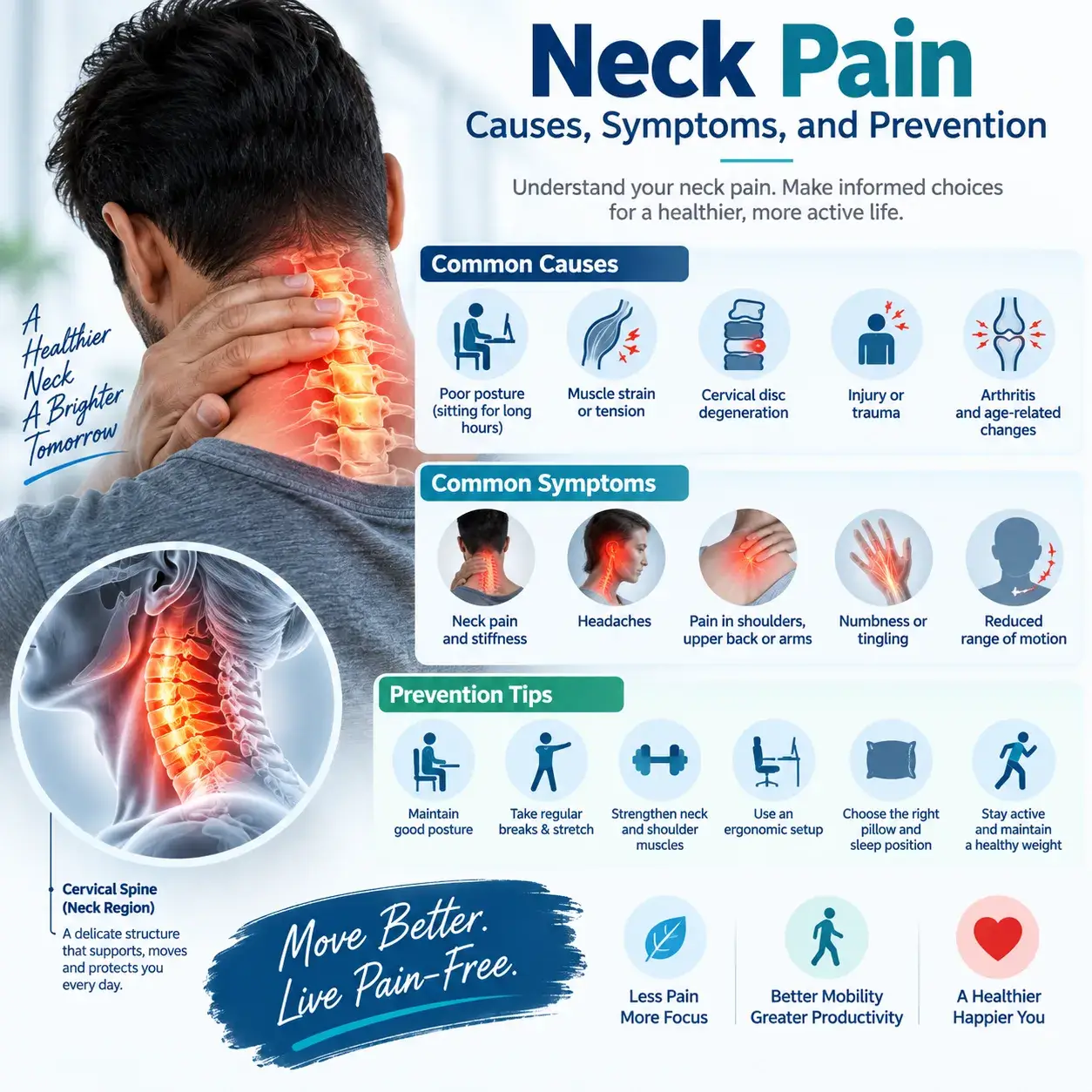
Neck Pain Causes, Symptoms, and Prevention
Your neck is made up of vertebrae. Muscles, ligaments, and other soft tissues support the neck and allow for motion. Many people get neck pain due to muscle strain, poor posture, overuse, or sleeping in an awkward position. Contact sports injuries, whiplash, and falls can also cause neck pain. In general, neck pain is a common complaint – whatever may be the cause.
Neck Pain Causes
Osteoarthritis – The cartilage between the bones (vertebrae) of the spine deteriorates. This mostly happens with age. As you age your cartilage and bones tend to become weak and are subject to everyday wear and tear. Osteoarthritis is one such factor that causes the destruction of the cushions (cartilage) between your vertebrae. This may partly happen with your age, lifestyle, and overuse.
Nerve Compression
Spinal nerves that branch out from the spinal cord can get compressed due to the formation of bone spurs or herniated disks. This can happen in the neck region and cause neck pain.
Strained Muscles
Neck muscles may become stiff and undergo tremendous pressure if you use them excessively. Excess hours spend on smartphones and computer desks often trigger muscle strains. Abnormal posture without any consideration to work desk ergonomics can also strain your neck muscles causing severe neck pain.
Neck Pain Causes – Collision and Injuries
An injury to the neck (the cervical vertebrae) resulting from rapid acceleration or deceleration (as in an automobile accident) can cause severe neck pain. When a rear-end collision occurs in an automobile in which you are sitting, your head is jerked backward and then forward. This type of impact strains the soft muscles of the neck causing severe neck pain.
How to Prevent Neck Pain?
If you have nagging neck pain, then ensure that your posture is proper while you carry out any task related to the neck – for instance, reading, writing, or doing work on your desk. Proper ergonomics play an important role in preventing neck pain.
In a majority of the cases, neck pain is associated with undue straining of neck muscles with improper posture and age-related wear and tear. Remember this general rule of thumb to prevent your neck pain:
Always keep your head centered over your spine.
Avoid Tucking the Phone
Don’t use your phone if you cannot hold it with your hands – for instance, while you are driving. If you get frequent calls, then use a speaker phone or headset or hand-free modes – whichever is feasible.
Avoid hunching over your work desk while using a computer screen and keyboard for work. Set proper work-desk ergonomics.
Avoid Carrying Heavy Loads
Don’t carry a heavy load on your back with bands getting the support from your shoulder. This will strain your neck muscles and cause neck pain.
If you carry heavy bags with shoulder straps then avoid using them.
Ensure proper sleeping position if you are prone to neck pain. While sleeping on the side ensure that a pillow is there under your neck with proper head and neck alignment.
Body ergonomics
Ensure that you always maintain proper posture – while sitting on the computer desk, while sitting anywhere, and standing.
Computer Desk Adjustments
Make adjustments to your computer desk, computer, and chair – Use a chair with an armrest, Adjust the computer monitor to eye level; Use the armrest of the chair to adjust your spine position. Keep your knees position slightly lower than your hips.
Bottom Line
Neck Pain Causes: Most neck pain improves gradually with home treatment. If not, see your doctor.
Less severe – Mild to moderate neck pain can improve on its own with proper home care and doctor’s treatment. However, if neck pain doesn’t improve with home care measures, then seek specialist medical care. In rare cases, neck pain can also be due to a very serious health issue – especially if it is associated with other health issues. Contact your Orthopedic doctor immediately if you start experiencing neck pain after a motor vehicle accident, injury or fall.
Contact your orthopedic doctor if your neck pain is severe. If your neck pain doesn’t improve even after several days and it is accompanied by numbness, headache, tingling sensation, and weakness in the arms and spreads down to the legs, consult your orthopedic doctor immediately.
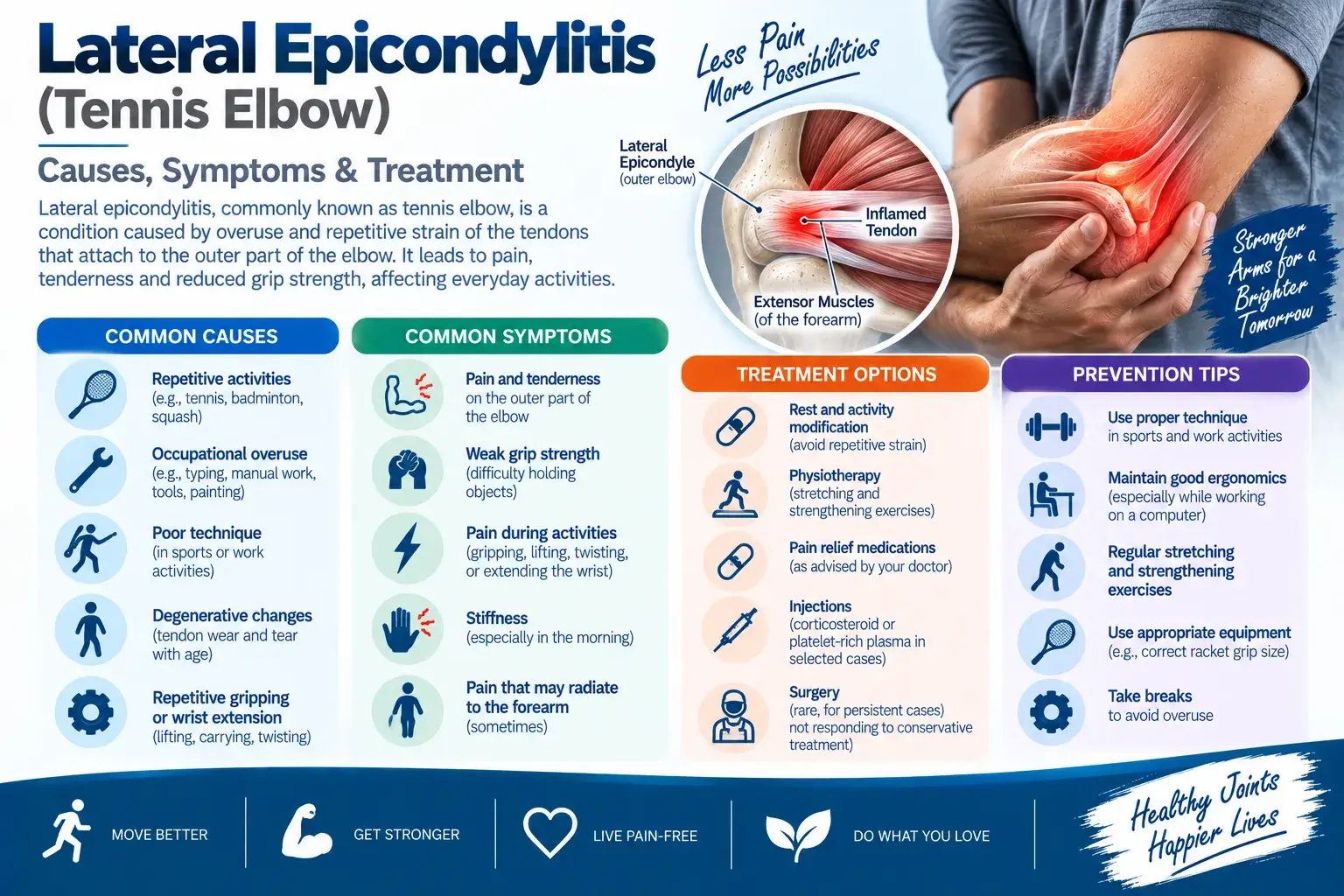
Lateral Epicondylitis (Tennis Elbow)
Tennis elbow treatment in Hyderabad | Dr. Praharsha Mulpur
Lateral epicondylitis or tennis elbow is an inflammation or a painful condition of the elbow. Overuse and repeating the same motions, again and again, can damage the tendons and the forearm muscles over a period of time. The bony bump on the outside (lateral side) of the elbow is called the lateral epicondyle. Repeated hand movements can cause tiny tears in the tendons that connect the forearm muscles to the elbow and trigger inflammation. These tendons include the extensors, particularly the extensor carpi radialis brevis (ECRB). As a result, people with this condition may experience pain and tenderness on the outside of the elbow. In particular, tennis players and people who participate in other racquet sports commonly develop this condition. Surprisingly, other activities and sports that involve repeated hand movements can also put a person at risk.
What is the prominent cause of tennis elbow?
Damage to a specific forearm muscle called ECRB causes tennis elbow. This mostly happens in tennis. Microscopic tears form due to overuse and weakness in the tendons where the muscle attaches to the lateral epicondyle. This leads to pain and inflammation. When the elbow moves repeatedly, the ERCB muscle undergoes wear and tear over time. Thus, it is prone to damage.
Who are at risk of developing tennis elbow?
People who are involved in vigorous and repetitive use of the forearm and extension of the hand and wrist may develop tennis elbow.
Many people think that this condition develops only in those who play tennis. On the contrary, people who involve in recreational activities or work also develop tennis elbow. Such activities require vigorous and repetitive use of forearm muscles. People who involve in the following works more often get tennis elbow: cooking, auto works, carpentry, plumbing, butchering, and painting work. These professions require lifting weights and repetitive work that lead to injury, inflammation, and pain.
In racquet sports like tennis, improper stroke technique and improper equipment may be risk factors.
Sometimes, tennis elbow can occur due to an unknown or idiopathic cause.
Age
It is not a major risk factor as anyone can get a tennis elbow irrespective of age. However, tennis elbow is more common between ages 30 and 50 years.
Lateral Epicondylitis (Tennis Elbow) Diagnosis
Your orthopedic doctor takes into account several factors including your profession and day-to-day activities. The doctor may ask you about your symptoms, occupational risks, and other recreational activities.
You should tell your doctor about any recent injury to your elbow or the activities that are causing the symptoms. If you have a nerve injury or rheumatoid arthritis, inform your doctor.
Tennis Elbow Test
During a physical examination, your doctor may ask you to straighten your wrist and fingers by fully straightening your arm to see whether this causes pain. If you feel pain, then this may indicate that your muscles have become weak.
Tennis Elbow X-ray & MRI: Your doctor may recommend determining the extent of damage in the tendon and muscle and ruling out other injuries. Electromyography (EMG) may be ordered to rule out nerve compression and nerve injuries.
Tennis Elbow Treatment in Hyderabad at Sunshine Hospitals
Tennis Elbow Physiotherapy
Your physiotherapist may suggest exercises to strengthen your forearm muscles. To improve muscle healing, the therapist may perform, ice massage and muscle-stimulating techniques.
Your orthopedic doctor may recommend special braces to cover the back of your forearm and give steroid injections to relieve pain and inflammation if it is severe.
Shock wave therapy
Extracorporeal shock wave therapy: A device sends sound waves to the affected elbow to create microtrauma. This is done to promote the body’s natural healing process. Some experts believe this therapy to be effective, but others consider it experimental.
Surgery for Lateral epicondylitis tennis elbow
There are many treatment options for tennis elbow. In most cases, treatment involves a team approach. A general physician, sports medicine expert, or a physical therapist may take care if you have mild symptoms. However, in some cases, an orthopedic surgeon operates to provide the most effective relief from symptoms.
If symptoms don’t respond to non-surgical treatments for up to a few months, your orthopedic doctor may recommend surgery. An orthopedic surgeon considers several factors – such as your overall health, personal needs, and the extent of injury, and then discusses the surgical options including arthroscopic surgery. If you have been suffering from nagging symptoms for a long, then meet Dr. Praharsha Mulpur for the best Tennis elbow treatment in Hyderabad.
