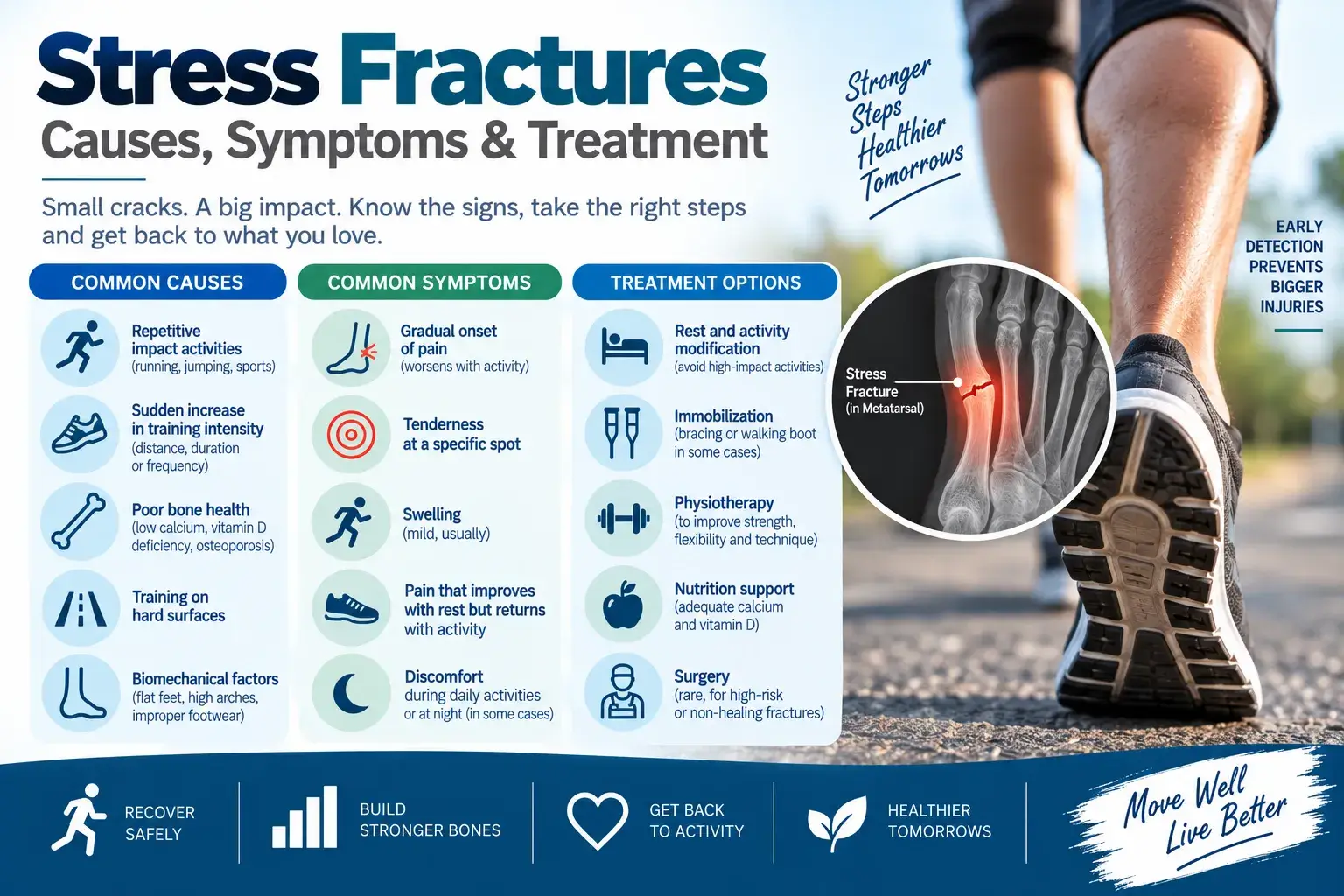
Bone fracture treatment in Hyderabad: A stress fracture is a small crack or severe bruising within a bone, typically caused by repetitive stress or overuse. It commonly occurs in weight-bearing bones such as the tibia (shinbone), metatarsals (bones of the foot), or fibula (calf bone), but can also happen in other bones. Athletes, particularly those involved in activities that involve repetitive impact or excessive loading on the bones, are more susceptible to stress fractures. However, anyone can develop a stress fracture under certain circumstances such as: undergoing excessive training without taking enough rest. Starting a new physical activity or sport without appropriate guidance, training or equipment. Spontaneously increasing activity level; training or working out without a proper equipment; playing the same sport without a break between seasons.
What causes Stress Fractures?
The main cause of stress fractures is the repetitive application of force or impact on a bone. In some cases, the bone does not have enough time to heal and recover between activities. As a result, repeated stress can gradually lead to a small crack in the bone.
Activities such as running, jumping, dancing, and sports can increase the risk of stress fractures. In particular, sports that involve frequent running or sudden changes in direction can place repeated stress on the bones.
Several factors can further increase the risk. These include sudden increases in activity level, improper training techniques, poor footwear, and hard training surfaces. In addition, certain medical conditions that weaken the bones can make stress fractures more likely osteoporosis.
What are the risk factors for stress fractures?
The following factors can increase the risk of stress fractures:
Eating disorders, obesity or excess body weight, vitamin D deficiency, flat feet, high-arch feet, osteoporosis and bunions.
Symptoms of Stress Fractures?
The symptoms of a stress fracture may include localized pain that worsens with activity and improves with rest, swelling, tenderness at the site of the fracture, and possible bruising. In some cases, the pain may be present even during rest if the fracture is severe. Other symptoms may include noticeable pain while resting; tenderness in the affected bone even to a light touch. Stress fractures require proper diagnosis and treatment to prevent complications and promote healing.
Diagnosis
If you suspect a stress fracture, it is important to consult an orthopedic doctor.
Bone Fracture Treatment in Hyderabad
To manage pain, your orthopedic doctor may recommend over-the-counter pain relievers or prescribed medications. Physical therapy and rehabilitation exercises are often prescribed to strengthen the surrounding muscles and help prevent future injuries.
Elevating the affected bone: If you have stress fracture in your foot or leg then keep the injured bone above the level of your heart by propping your leg up with cushions and pillows while laying down.
Surgery
Your orthopedic doctor may suggest surgery if your stress fracture doesn’t heal as it should or when you have severe symptoms.
Prevention of stress fractures
Prevention is crucial when it comes to stress fractures. Some preventive measures include gradually increasing activity levels, using proper footwear that provides support and cushioning, maintaining a balanced diet rich in calcium and vitamin D for bone health, cross-training to vary the types of activities and reduce repetitive stress on specific bones, and listening to your body by taking breaks and allowing for proper rest and recovery.
Bottom Line</strong>
Pain is often the first symptom of a stress fracture. First, stop the activity that is causing pain.
