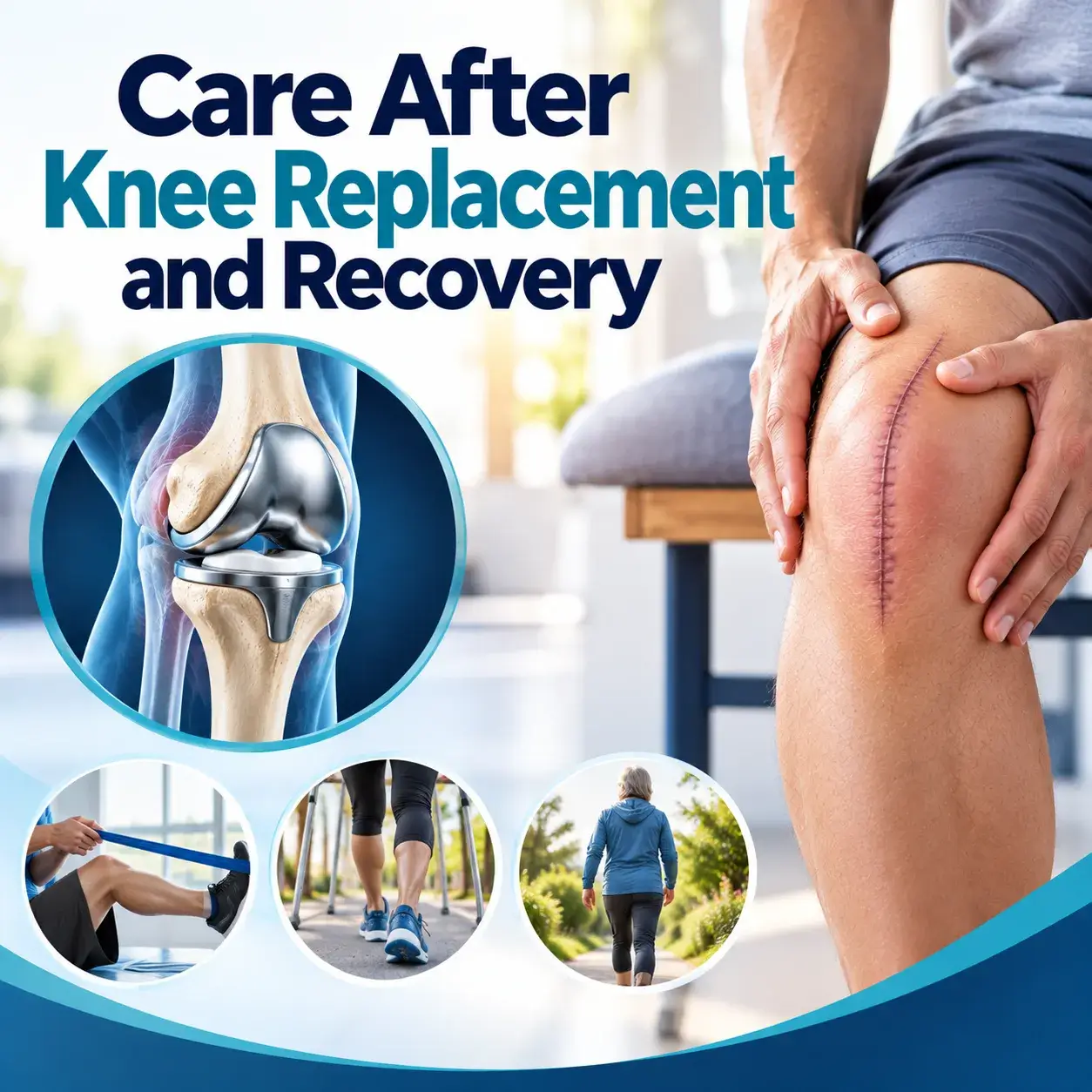
Care After Knee Replacement and Recovery
Care after knee replacement surgery | Dr. Praharsha Mulpur
Knee replacement surgery provides relief from severe pain with improved mobility and better quality of life. In a majority of the cases, knee replacements are expected to last for more than 15 years. However, you must take care of your new knee joint.
After the procedure
Your hospital stay depends on your individual case and requirements. Many patients leave the hospital the same or very next day. Doctors prescribe medications to help control pain. Your doctor will advice you to wear support to prevent swelling and clotting. A physiotherapist will assist you in improving your activity levels and show you the exercises for your new knee. You will continue the exercises at your home or a centre, once you leave the hospital.
What else can you do?
Make your home a safer place to dwell and make it easier to recovery. Take care of the following:
Ensure safety handrails in your bathroom
To avoid climbing stairs, have a living space on ground floor.
Use a stable well-cushioned and firm chair with a comfortable back support.
Have a stable chair in the bathroom for shower.
Remove loose surfaces, cords and rugs.
What to Expect after a knee replacement?
You can resume the following activities within three to six weeks after knee replacement, including most common daily activities, light housekeeping, and shopping. However, your recovery time may vary depending on your progress. When it comes to driving, you can drive if you can sit comfortably in the car, have good muscle control to operate the clutch, accelerator, and brakes, and have stopped taking narcotic pain medications.
As your recovery progresses, you can gradually return to your normal routine. In addition, you can engage in low-impact activities such as biking, golfing, swimming, and walking. Furthermore, these activities can help you stay active while placing less stress on your knee joint.
You should avoid the following activities:
Jumping, contact sports, tennis, skiing, jogging and other contact and high-impact exercises and sports. Talk to your Orthopedic surgeon regarding any limitations that you may have in your case. If you have any more concerns regarding the care after knee replacement surgery, meet Dr. Praharsha. Learn Why Robotic Knee Replacement is a better option…

Rheumatoid Arthritis – Causes & Symptoms
What is Rheumatoid arthritis?
It is an autoimmune disorder that causes inflammation in the joints. It occurs when your body’s own immune system attacks cells and tissues in the joints. The condition is often associated with painful swelling in the joints – which eventually causes bone erosion and joint deformity.
Can rheumatoid arthritis affect other organs?
Yes, it is a chronic inflammatory disorder that can affect your skin, blood vessels, heart, lungs, eyes, and other body systems.
What are the symptoms of rheumatoid arthritis?
The signs and symptoms associated with rheumatoid arthritis include:
- Joint stiffness
- Loss of appetite, fever, and fatigue
- Swollen joints that are warm and tender to touch
- Bone erosion in the joints with swelling and slight deformity
- First RA affects the smaller joints – fingers, hands, toes, and feet.
- The progressive disease affects – the elbows, ankles, knees, wrists, shoulders, and hips.
- Rheumatoid arthritis may also affect blood vessels, heart, lungs, kidneys, eyes, and skin
- People who have this condition may experience alternate periods of flares and remission. Symptoms may vary in severity with swelling and pain that may disappear and then reappear.
- As the disease progresses, joints deform and shift out of place.
What are the causes?
Rheumatoid arthritis (RA) is an autoimmune disorder wherein your immune system attacks your body’s own cells and tissues in the joints. The normal function of our immune system is to protect our body from diseases and infection. In the case of RA, the reverse happens. Doctors don’t have any clue as to what starts this process. Your genes and environmental factors may trigger the disease.
While rheumatoid arthritis cannot currently be cured, several treatment options are available to help reduce pain, inflammation, and joint damage. In recent years, stem cell injections for arthritis have gained attention as a possible regenerative treatment. However, the scientific evidence is still evolving, and not every patient may benefit. Read our detailed guide on Stem Cell Injections for Arthritis: What the Evidence Really Says to understand the latest research and current medical recommendations.
What are the risk factors for rheumatoid arthritis?
Women are at increased risk of rheumatoid arthritis especially if they have a family history of the disease. The disease can strike at any age but commonly occurs in middle-aged women. Compared to men women are at increased risk. The other risk factors include excess body weight and smoking.
What are the complications associated with rheumatoid arthritis?
The complications associated with rheumatoid arthritis include the following:
Proneness to infections increases
Lean mass to fat proportion is high in people who have RA
Rheumatoid nodules form around elbows
Sjogren’s syndrome develops – eyes and mouth become dry
The risk of osteoporosis increases
The risk of heart disease, lungs problems, and kidney issues increase
When to See a doctor?
Make an appointment with your doctor if you feel weakness, stiffness, and swelling in your joints with pain and discomfort.
Rheumatoid arthritis (RA) is an autoimmune disorder wherein your immune system attacks your body’s own cells and tissues in the joints. The normal function of our immune system is to protect our body from diseases and infection. In the case of RA, the reverse happens. Doctors don’t have any clue as to what starts this process. Your genes and environmental factors may trigger the disease.
For additional information about rheumatoid arthritis, see the National Institute of Arthritis and Musculoskeletal and Skin Diseases (NIAMS).
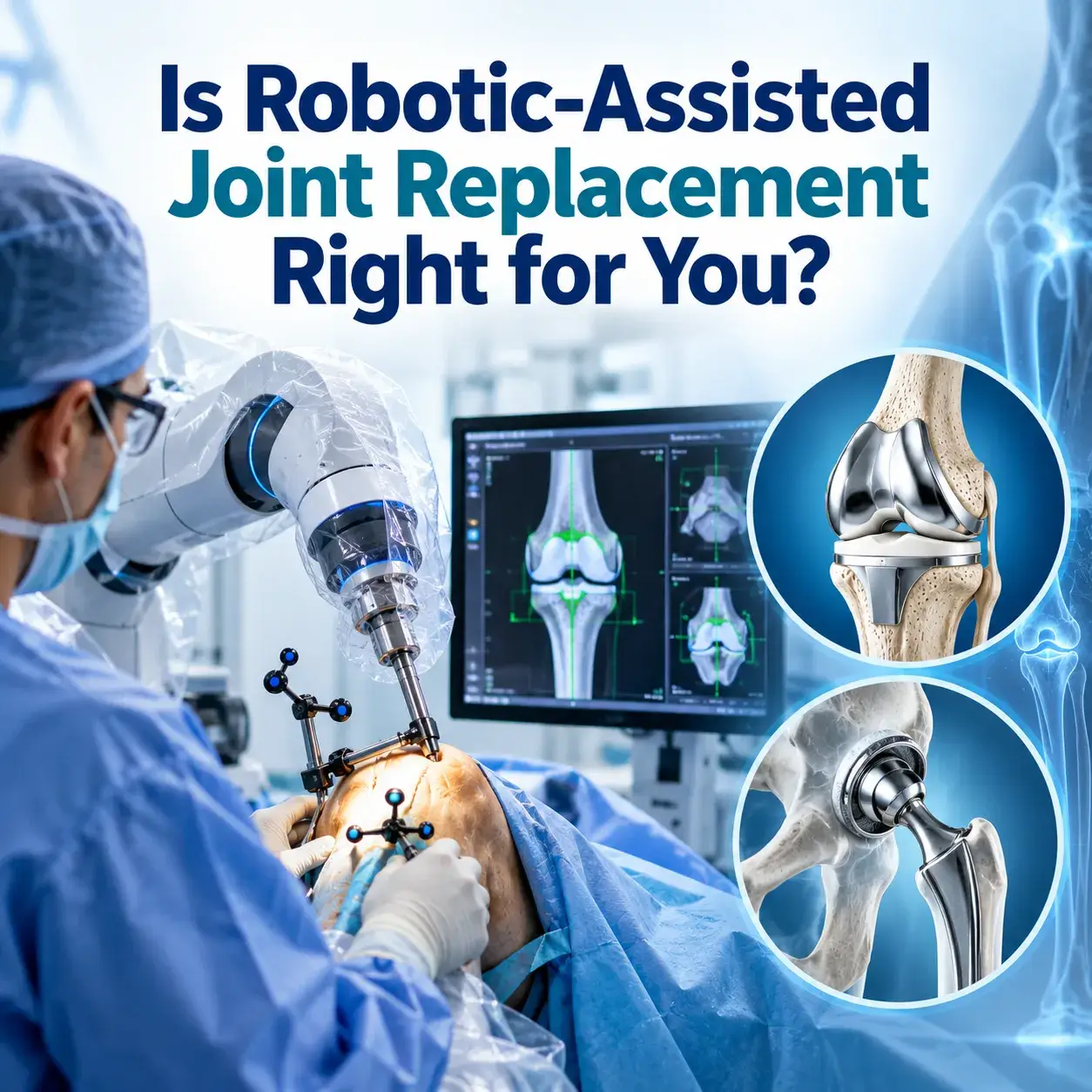
Is Robotic-Assisted Joint Replacement Right for You?
Advantages of robotic joint replacement | Dr. Praharsha Mulpur
Many patients are a bit skeptical rather hesitant when it comes to robotic joint replacement surgery and the involvement of the robotic arm in assisting surgery. They may have their own concerns and apprehensions regarding the clinical outcomes. A few patients even assume that this type of technologically advanced, precise, and accurate surgery is only for selected few patients. On the contrary, robotic joint replacement is for anyone. The thumb rule is if you are a good candidate for joint replacement surgery, you are also the best candidate for robotic joint replacement surgery.
Accuracy and Improved Outcomes
Remember! If you are looking for better results with accuracy and precision, then robotic-assisted joint replacement surgery is for you. For excellent results, Orthopedic surgeons need improved accuracy – which they get through robotics technology.
When it comes to robotics technology, it is not limited to any one patient or a selected group of patients. In general, it is for all those patients who are eligible for joint replacement surgery.
We use robotic technology for joint replacements including total knee replacement, total hip replacement, and partial knee replacement.
Correct dimensions, sizing, and positioning of the implant
If you are planning robotic joint replacement surgery – Knee replacement or hip replacement, we plan your surgery based on the unique anatomy of your joint.
The robotic arm allows the surgical instrument to operate only in one plane making it very precise. The operating Orthopedic surgeon cannot go outside the dimensions specified by the robotic arm.
Bottom Line
Advantages of robotic joint replacement: When compared to traditional (standard) joint replacement procedures, robotic-assisted joint replacement is advantageous. In addition, the failure of a robotic-assisted joint replacement is nil as compared to other joint replacements. Robotic joint replacement improves accuracy and outcomes. Those who opt for robotic joint replacement are at an advantage because they can expect more personalized, customized, and individually tailored implants.
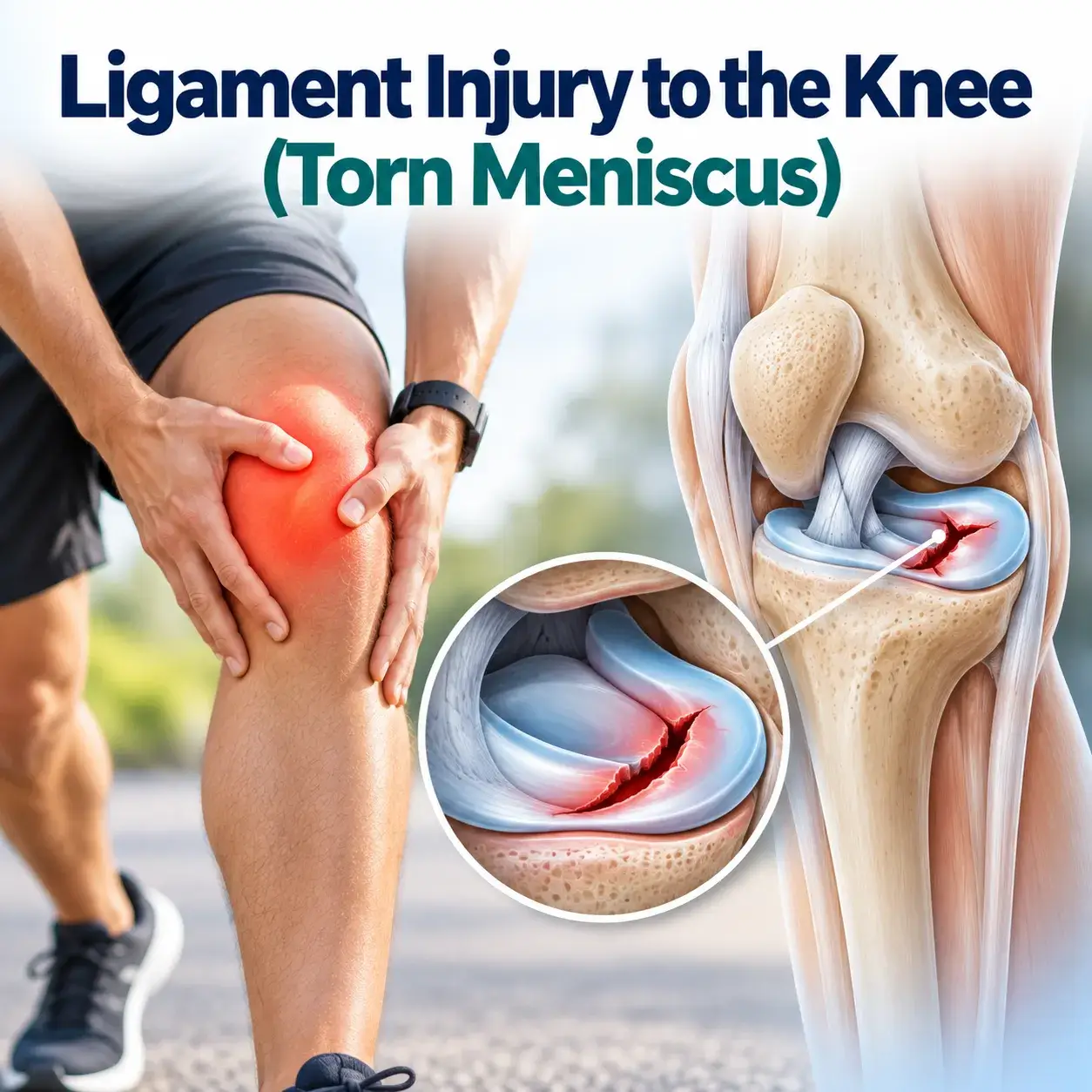
Ligament Injury to the Knee (Torn Meniscus)
Meniscus Tear (Treatment in Hyderabad) | Meniscus tear surgery cost in Hyderabad | Dr. Praharsha Mulpur
Among knee injuries, a torn meniscus is a very common type of injury. Many people may or may not be aware of it, but it is a fact. Meniscal tear is the most frequently occurring knee injury. The condition is often debilitating and painful.
There are two C-shaped pieces of cartilage in your knees. They are just like cushions between the shinbone and the thighbone. In other words, meniscus cushions stabilize the knee joint and also protect the bones from wear and tear. When the meniscus tears, it causes pain, swelling, and stiffness in the knee. Many people experience walking difficulty due to blocked knee motion and trouble extending their knees.
Signs of a torn meniscus
If a tear in the meniscus is small, then the prominent symptoms such as pain and swelling may begin after 12 to 24 hours. However, symptoms may manifest early depending on the nature and extent of the damage. In general, a torn meniscus is associated with the following signs and symptoms:
- Pain – which is severe especially when rotating or twisting the knee
- In the beginning, pain may not be bad, but once inflammation sets in and swelling starts to appear the pain becomes severe.
- Stiffness and swelling
- A popping sensation in the knee
- A feeling of my knee becoming difficult to keep up
- Fully stretching the knee becomes difficult
- Difficulty in straightening the knee
- Feeling as if the knee is locked while walking
- Difficulty straightening your knee fully
What does a torn meniscus feel like?
Some people feel as if their knee is blocked. The knee joint seems to be locked up when a piece of shredded cartilage breaks and catches in the knee joint. Rotating, moving, stretching, and completely extending the knee becomes very difficult.
Causes of a torn meniscus?
Sports – especially contact sports and also physical activities that involve sharp and sudden turns and movements may result in meniscus tears. The injuries happen in soccer, volleyball, beachball, and other sports wherein a person suddenly changes direction while running. Meniscus weakens with age – and therefore – older athletes are at risk of injury.
In general, meniscal tears may occur if a person involves in any activity that forcefully rotates, twists or put excess pressure on the knee. Therefore, a torn meniscus is the most common knee injury.
How to heal a torn meniscus naturally?
In some cases, taking rest, medication, and ice application may help relieve pain due to a torn meniscus. This approach may provide time for the injury to heal on its own. This conservative treatment approach is not always enough to get rid of pain and other symptoms. Therefore, surgery becomes indispensable in such cases.
Diagnosis
Physical examination
An Orthopedic doctor will examine your knee after taking into account your medical history and symptoms. The doctor checks for tenderness – especially in the area where the meniscus sits. This gives a clue to the doctor whether there is a tear.
Torn meniscus symptoms test
McMurray Test: It is the main test for checking meniscus tears. In this test, an Orthopedic doctor bends your knee and then straightens and rotates it. This activity creates pressure on the torn meniscus. Therefore, if a person has a meniscus tear, the movement may cause clunking or a clicking sensation and pain in the joint.
Imaging tests
To confirm the diagnosis of a torn meniscus, your Orthopedic doctor may order a few imaging tests.
X-rays – They do not show a meniscal tear, but X-rays are helpful in diagnosing the other causes of knee injury or knee pain – for instance: osteoarthritis.
Magnetic Resonance Imaging (MRI) scans: These scans help in thoroughly assessing the condition of soft tissues in the knee joint including menisci as well.
Meniscus Tear Treatment in Hyderabad (Torn Meniscus Surgery)
If you tried physical therapy, exercises, medications (NSAIDs), and RICE (Rest, Ice, Compression, and Elevation) and the meniscus injury doesn’t heal, then you may need surgery. Serious meniscus tears may not heal on their own. Unstable and large meniscal tears causing locking symptoms may require surgery. It is the best and most effective way to repair a torn meniscus. The knee will become stable after recovery, post-surgery.
Meniscus tear surgery cost in Hyderabad
The average cost of meniscus tear surgery in Hyderabad may range anywhere between Rs. 80,000 to Rs. 1,50,000. Moreover, meniscus tear surgery cost in Hyderabad may vary based on the health status of the patient, the type of procedure, experience, and expertise of the orthopedic surgeon, and the hospital in which the patient is seeking treatment.
If you have additional queries regarding meniscus tear treatment in Hyderabad at Sunshine Hospitals, then book an appointment for further details.
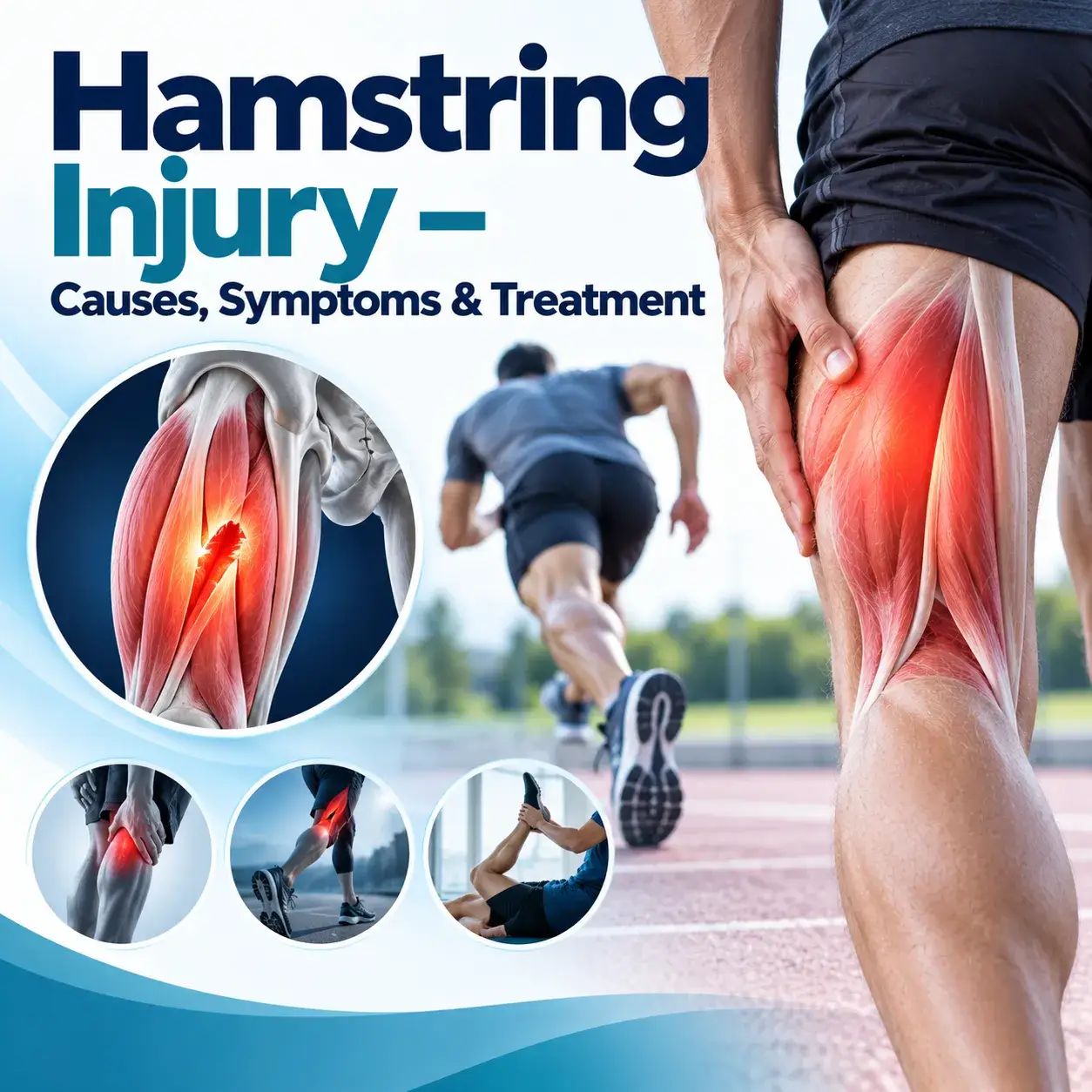
Hamstring Injury – Causes, Symptoms & Treatment
Hamstring injury Treatment | Dr. Praharsha Mulpur
A group of muscles at the back of the thigh belongs to the hamstring muscle group: there are three muscles in it: semitendinosus; semimembranosus and biceps femoris. These muscles help in extending the leg and bending the knees. Muscle strain or pulled hamstring or hamstring injury is an injury to one or more of these muscles at the back of the thigh. It happens when the muscles are overloaded or overstretched. Depending on the injury the muscles can tear partially or completely.
Hamstring injury is most common in athletes – particularly in those who play basketball, soccer and participate in sprinting – such as track. A strain or pulled hamstring can be a pull, injury, a partial tear, or a complete tear of muscles at the back of the thigh. The most common type of injury is pulled hamstring which commonly occurs in athletes. In many cases, hamstring injury occurs in the muscle belly (the thick, central part of the muscle) or the point where tendon fibers join the muscle fibers. In a severe type of hamstring injury known as avulsion injury, the tendon tears completely away from the bone.
What are the grades of a Hamstring Injury?
A hamstring injury or muscle strains’ grades are defined based on the severity.
Grade 1 is a mild strain or muscle pull (heals readily).
Grade 2 is a partial muscle tear with somewhat more pain than grade 1 strain. The person with this type of strain will feel weak and is more likely to limp.
Grade 3 is a complete muscle tear (this type of injury takes months to heal). A person with this type of strain hears a popping sound at the time of injury and the thigh becomes extremely painful.
Causes of a Hamstring Injury
The most common cause of hamstring injury is overstretching, which occurs when the muscle stretches beyond its normal capacity.
The other possible reasons for muscles strain include the following:
-
Muscle overload (when a sudden load challenges the muscle)
-
Extremely hard training resulting in muscle fatigue
-
Insufficient warming up
-
Inadequate pre-conditioning program
-
Previous hamstring injury
- A direct blow to your thigh
Hamstring Injury Symptoms
A sudden jerking pulls on the tissues of the hamstring muscle. A person who has hamstring injury experiences a sharp, sudden pain with a popping or tearing sensation in the back of the thigh. In addition, the person also feels muscle weakness or an inability to put weight on the affected leg. The injured person may also feel or hear a popping or tearing sensation. There is a variation in the intensity of the pain. The person having pulled the hamstring cannot continue the activity and often cannot even stand. Along with muscle weakness, discoloration or bruising may appear. Tenderness and swelling may also develop usually within a few hours.
Muscle spasms, tenderness, and tightness are associated with a hamstring injury. In case of a severe injury, physical examination reveals swelling, inflammation, blue, black, or bruised appearance. Orthopedic doctors also detect injury, in some cases, by touching a palpable defect in the muscle. Muscle strains and tears most commonly occur in the middle of the back of the thigh or at the base of the buttock.
Diagnosis of Hamstring Injury
An Orthopedic surgeon, first of all, check the thigh for tenderness, swelling, and bruising. It will help the doctor decide whether the injury is mild or severe. The doctor may also order an ultrasound or MRI to determine the extent of muscle injury.
Hamstring Injury Treatment
The treatment largely depends on the extent and grade of injury. In most sports injuries, the first line of treatment is RICE Method. However, for a severe grade III injury surgery may be recommended to remain the torn muscles. The acronym RICE stands for Rest, Ice, Compression, and Elevation.
Bottom Line
Hamstring muscle injury is a common athletic injury. A majority of Orthopedic surgeons specialize in injury evaluation and Hamstring Injury treatment. Tendons and muscles injured during a hamstring injury heal without surgery. However, grade 3 injuries require surgery to repair the injured muscles. Regular stretching and exercises and warm-up before activities can help reduce the risk of hamstring injuries.
