Hip Fractures Types, Treatment and Recovery
Hip Fracture Treatment in Hyderabad | Dr. Praharsha Mulpur
When the hip bone breaks hip fracture results. It mostly happens in the upper part of the hip bone (femur). Hip bone is the strongest bone, but can become weak in the elderly people due to osteoporosis. Therefore, even young people can become prone to hip fractures. In young people hip fractures can be due to severe fall and collision events – such as vehicle accidents.
The Hip Joint
Hip joint is a ball-and-socket joint. The upper part of the femur (thighbone) is the head (the ball). The part of the pelvis bone that is socket like is called acetabulum (rounded shape that fits around the femoral head).
Hip fracture types
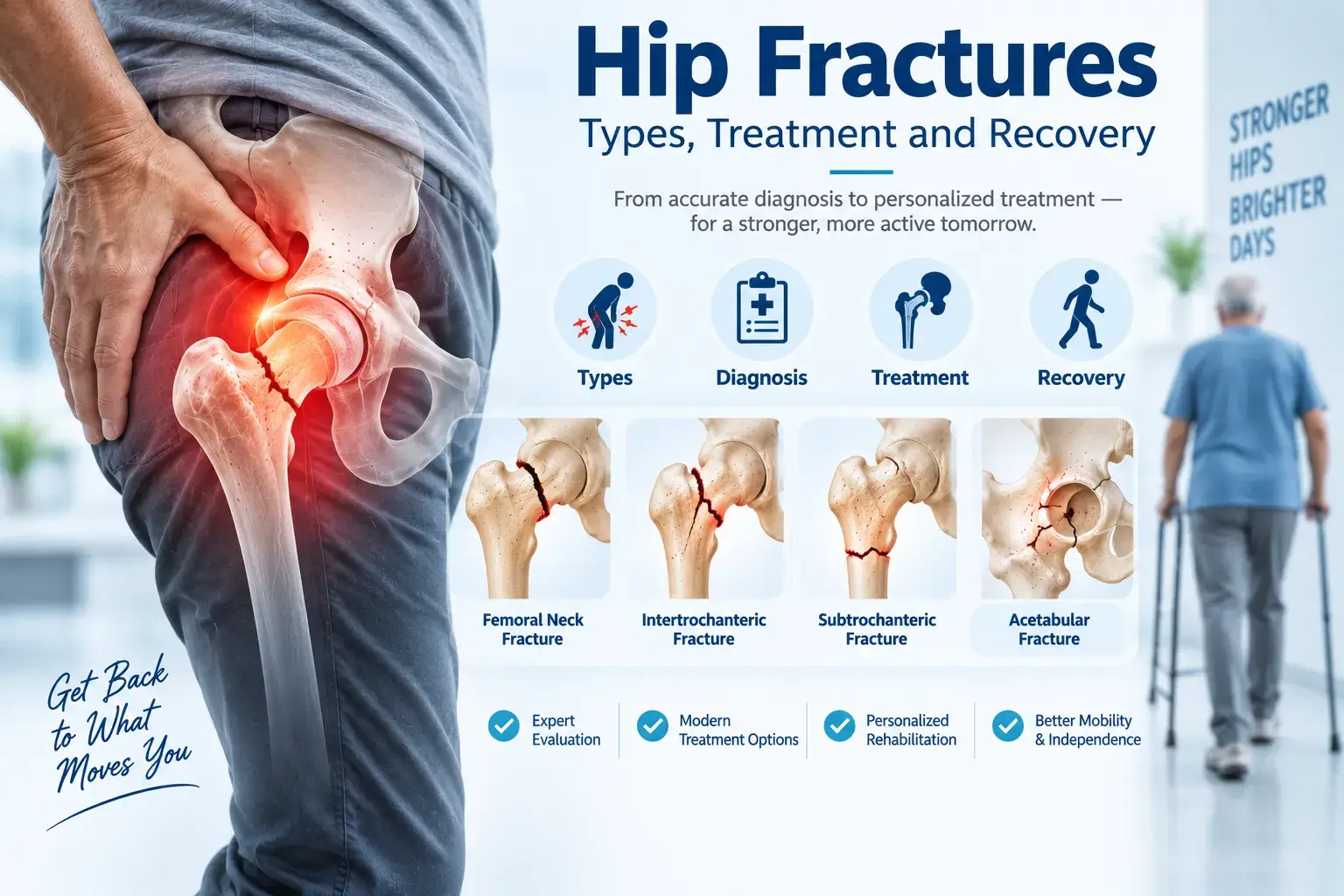
Hip fractures due to injuries can occur in any of the following areas of the upper femur:
Femoral head: It is the ball of the femur that sits in acetabulum. The fractures of this type are extremely rare and may occur only when there is a high-impact or high-velocity even -such as road accident.
Femoral Neck: The femoral neck lies below the femoral head. Femoral neck fractures represent one of the most common types of hip fractures.
Intertrochanteric Area: This area lies above the femoral shaft and below the femoral neck. Doctors call it the intertrochanteric area because it lies between two bony landmarks: the lesser trochanter and the greater trochanter. Intertrochanteric fractures also rank among the most common types of hip fractures.
Subtrochanteric Area: This area forms the upper part of the femoral shaft, just below the greater and lesser trochanters.
Hip Fracture Treatment in Hyderabad
Hip fractures often require surgery as early as possible to reduce the risk of complications. Before surgery, your orthopedic surgeon will assess your overall health and make sure you can safely undergo the procedure. As part of this evaluation, a cardiologist and pulmonologist may examine you when necessary.
Doctors call this process preoperative optimization. In addition, your medical team should complete the necessary preoperative tests within 48 hours.
Hip fracture recovery
Physical and occupational therapists will work with the patient after surgery during the recovery period. They will show some exercises and tell the patient about the amount of weight they can put on the leg. They will also give instructions on how to manage daily activities – such as dressing and bathing.
Hairline hip fracture treatment
The first line home treatment or home remedy for a hairline fracture include RICE method – rest, application of ice, using compression and elevation. NSAIS’s are helpful to manage pain and swelling. If the pain and swelling doesn’t come down, you may need to see an orthopedic doctor. The treatment may depend on the extent, location and severity of bone injury. Your doctor may recommend using crutches to keep weight off the affected leg. Mild hairline fracture may heal on their own over a period of few weeks.
Hip fracture treatment without surgery
Isolated fracture of the greater trochanter: It occurs due to low-impact events such as household fall. This type of hip bone fracture is often painful, it usually heals without surgery. Patients with this type of fractures are treated with weight bearing aids such as walker and crutches.
Hip fracture in elderly
Hip fractures are not very common in young people. If they occur in young adults, they may be due to high-impact forces and events -such as fall from a height or motor-car or motor-bike accidents. In the elderly people bones become weak due to loss of mineral density related to age and osteoporosis and other health conditions.
Hip fracture X-ray
Most of the hip fractures can be diagnosed with X-rays.
MRI (Magnetic Resonance Imaging) Scans. For a more detailed visualization of fractures MRI provides fine images with complete details. It is helpful in detecting damage to soft tissues and bones. MRI scans are very sensitive as they can help detect an incomplete or small fracture that can not be seen on an X-ray.
CT scans – Computerized Tomography scans help provide detailed and clear images of the hip joint (cross-sectional images). An orthopedic doctor order a CT scan to get more details about the fracture.
Bottom Line
Painful hip fractures need immediate medical care and surgical intervention to fix the bones as early as possible. The primary goal of an orthopedic surgeon is to get the patient out of the bed so that complications such as blood clots, bed sores, infections and pneumonia can be prevented. When elderly people take prolonged bed rest, it may lead to disorientation and therefore their rehabilitation becomes very difficult. If you have any doubts pertaining to hip fracture treatment in Hyderabad, book an appointment with Dr. Praharsha Mulpur.
Hip Pain – Causes, Symptoms, Diagnosis & Treatment
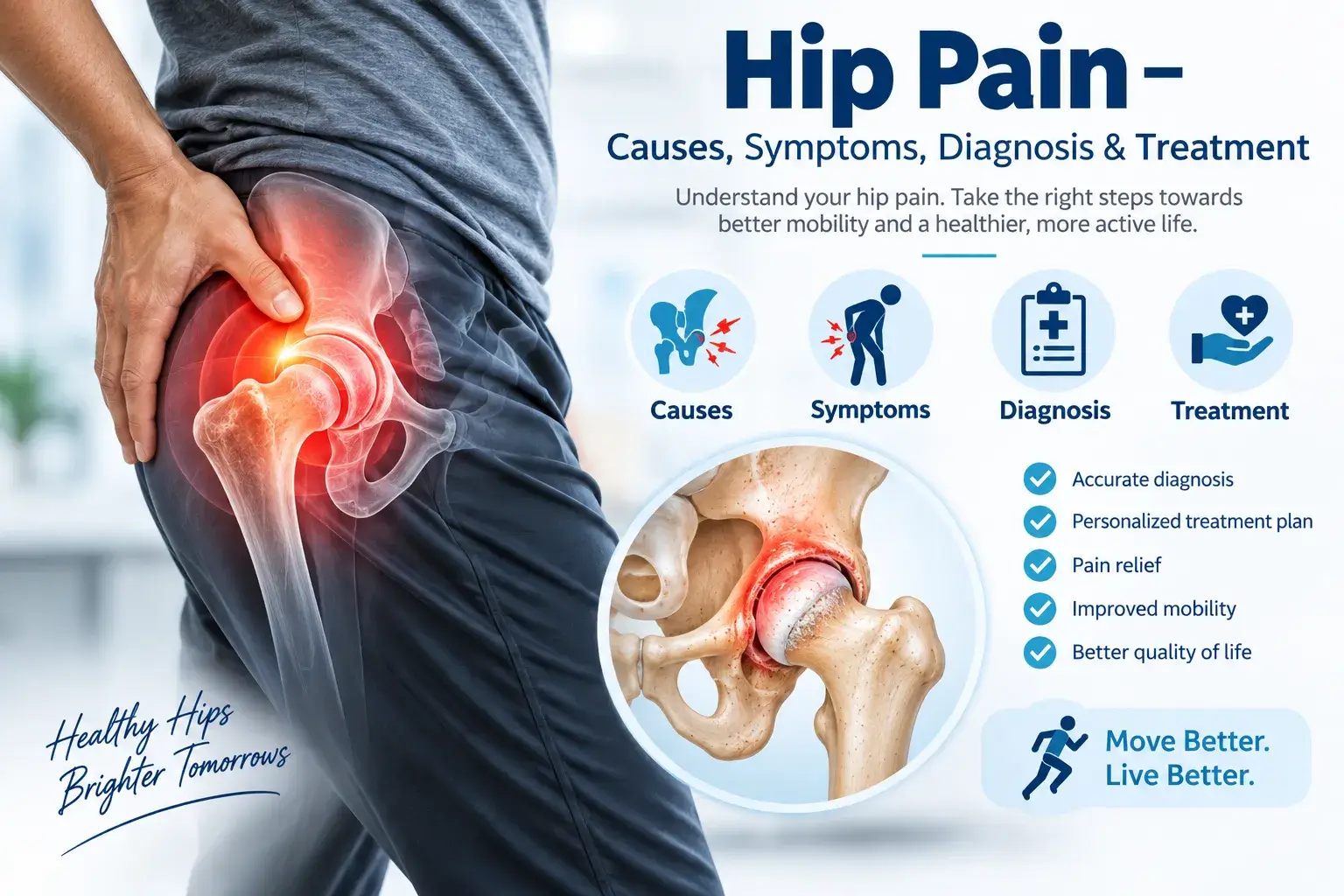
Hip pain causes: The Hip joint is a ball-and-socket joint. It is your body’s largest joint, and therefore, subjected to a huge amount of wear and tear. It withstands repeated and regular movements.
Hip Pain Symptoms
Hip Pain: It is often felt in and around the hip joint. The pain is not confined to the hip itself as it radiates to the groin and is also felt in the thigh. Hip pain is a common complaint.
Knowing the exact location of the pain is important because a wide range of health conditions can cause hip pain.
The type of hip pain, location, and severity give valuable information about the underlying cause.
In general, your hip pain can be due to problems with the ligaments, muscles, tendons, bones, and soft tissues that surround your hip joint. You feel hip pain on the inside or outside of your hip on the outer buttock or upper thigh.
Problems with your hip joint cause pain in the groin, down the front of the legs, and in the knees
Radiated or Referred Hip Pain: In some cases, knee pain is the only prominent sign of hip problems.Doctors call this type of pain radiated or referred hip pain.
This is a very common type of hip pain. Sometimes, the pain you feel in your buttocks and outside of your hip can be caused by problems in your lower back.
Any condition disease or disorder in other parts of the body can cause hip pain. For instance, lower back pain can cause hip pain (referred pain). This is seen in sciatica.
Hip Pain Causes
Cushion-like cartilage acts as a shock absorber and prevents friction when you move your hip bones within the socket. In general, aging, regular use, and excessive stress can gradually wear down and damage the cartilage between the hip bones. Similarly, excessive use can strain the soft tissues, including the ligaments, tendons, and muscles. A hip injury and falls can break a hip bone. If you have any of these conditions, you may experience hip pain.
Short-term and long-term Hip Pain
Hip pain causes: Overuse or exertion can cause short-term hip pain due to strained or inflamed soft tissues – tendons, ligaments, and muscles. However, specific health conditions such as osteoarthritis and rheumatoid arthritis can cause long-term hip pain.
Hip Pain Causes
- Osteoarthritis
- Sciatica (pinched nerve condition)
- Sacroiliitis (pinched nerve)
- Juvenile rheumatoid arthritis (juvenile idiopathic arthritis)
- Rheumatoid arthritis and septic arthritis
- Tendinitis, Sprains
- Hip fracture, Bursitis and hip labral tear
- Osteoporosis
- Osteomyelitis (bone infection)
- Avascular necrosis (Osteonecrosis)
- Synovitis
Diagnosis of Hip Pain
For the diagnosis of hip pain and to accurately determine the cause of your hip pain, your orthopedic doctor will order a few blood tests and imaging tests such as X-rays. To know finer details and views of the internal structure of your hip joint, your doctor may also recommend ultrasound or CT scans.
Hip Pain Treatment – How to get relief from Hip Pain?
Over-the-counter medications offer help in relieving hip pain caused by tendinitis or osteoarthritis.
If you have rheumatoid arthritis, then prescription medicines including anti-inflammatory medicines and corticosteroids can help.
Taking rest and warm water bath and application of cold and warm compressors can also help in relieving pain.
Low-impact exercises and stretching can improve mobility. Physical therapy can also improve a wide range of motions.
Hip fractures need surgery to fix. In other cases, wherein hip pain doesn’t improve after a week’s time or lasts longer than a week, then you must see your Orthopedic doctor, and they will come out with a pain management plan to treat your condition.
When is hip replacement surgery recommended?
In some cases, osteoarthritis becomes very severe.
When the hip joint becomes completely deformed due to osteoarthritis, hip replacement may be recommended.
When should you see an Orthopedic Doctor for hip pain?
If you experience severe hip pain along with swelling, redness, or warmth around the hip joint, seek medical attention. In addition, an orthopedic doctor can evaluate the underlying cause and recommend appropriate treatment.
If you experience sudden hip pain or joint pain after a fall or injury or if your joint looks deformed, then you must see an Orthopedic doctor immediately.
If you hear a popping sound in your joint or you cannot move your hip joint or put weight on your joint or if your hip pain becomes severe, fix an appointment with Dr. Praharsha Mulpur.
Shoulder Pain Causes, Symptoms, and Treatment
Shoulder pain causes
The shoulder joint allows a wide range of motion in the arm. It is the most movable joint in your body. Muscles and tendons together known as rotator cuff allow the shoulder to move in a wide range of motions.
Rotator Cuff Muscles
The rotator cuff consists of four muscles and their tendons, which help keep the upper arm bone securely in the shoulder socket.
These muscles help in a wide range of motion and stability.
Bones of the Shoulder Joint
The shoulder joint has three bones: the humerus (upper arm bone), scapula (shoulder blade), and clavicle (collarbone). In the shoulder blade, a rounded socket takes the head of the upper arm bone. The socket is known as the glenoid socket. Tendons and muscles (rotator cuff) keep arm bone centered in the glenoid socket.
Shoulder Pain
Shoulder pain can be temporary or may be present all the time. You can feel pain when you lift your arm above the head or move it behind or forward. You feel shoulder pain when you move your shoulder. Chronic shoulder pain requires accurate diagnosis and prompt treatment.
Shoulder Pain Causes
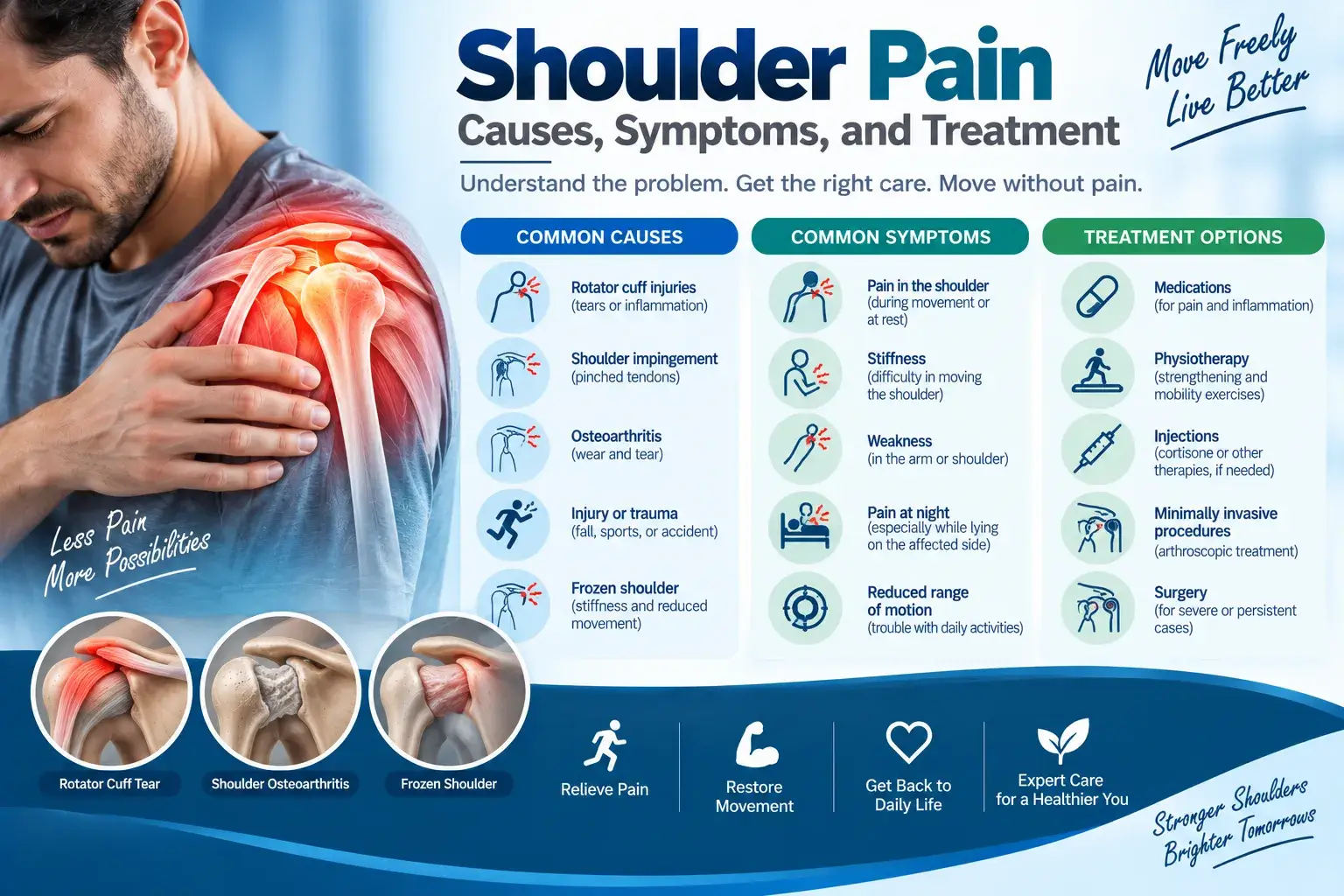
Tendinitis
Doctors call tendon inflammation (a cord that attaches muscle to bone) tendinitis.
It is of two types: Acute – excessive involvement in activities, sports, or works that put pressure and strain on the shoulder joint can cause acute tendinitis; Chronic tendinitis: progressive damage to the tendons due to repetitive wear and tear or arthritis and other degenerative conditions of the shoulder joint can lead to chronic tendinitis.
Bursitis
The shoulder joint has small fluid-filled sacs called Bursae. They act like shock absorbers or cushions between the bones and cartilages and soft tissues. Bursae help in reducing friction between the shoulder bone and gliding muscles.
They are present in joints throughout the body. Sometimes, overuse and excessive strain on the shoulder joint may lead to swelling and inflammation of the bursa. This may cause shoulder pain.
Both rotator cuff tendinitis and bursitis often occur together. This happens when several tissues become involved, causing pain and inflammation. When this occurs, even simple day-to-day activities such as getting dressed or combing your hair can become difficult.
Arthritis
Osteoarthritis is the most common type of arthritis in the shoulder joint that causes inflammation and pain. It is the wear and tear type of arthritis common during middle-age years. The symptoms such as joint stiffness, pain, and swelling begin during middle age and progress gradually. The symptoms worsen over a period of time.
Other types of arthritis, in general, can be due to inflammation, an infection, rotator cuff tear, work-related injury or chronic wear and tear. People with arthritis tend to avoid shoulder movement. This will lead to stiffness and tightening of the joint with a painful limitation of motion.
Shoulder Instability
Shoulder dislocations cause instability when the upper arm bone moves out of the shoulder socket. When the ball of the upper arm bone moves only partially out of the socket, doctors call the injury a subluxation.
In a complete dislocation, the ball comes out of the socket completely. Shoulder instability results from overuse or sudden injury.
The risk of repeated dislocations increases if muscles, tendons, and ligaments are torn or turn loose. When you raise your arm above, you will feel pain and unsteadiness in your shoulder joint.
Tendon Tears
Tendons tears partially or completely due to a sudden injury, wear and tear, excessive usage, and advancing age. Long-term degenerative changes in the tendons can also result due to aging and overuse.
Fractures
Fractures commonly occur in the shoulder blade (scapula), clavicle (collarbone), and upper arm bone (humerus). In young people, fractures are often caused by sports, high-impact sports or activities, and severe blows. In elderly people, shoulder fractures result from falls. Fractures often cause severe pain, swelling, and bruising on the shoulder.
Diagnosis
Your Orthopedic doctor evaluates the cause of shoulder pain by taking into account your thorough medical history. The information about the nature of pain, the activities you do and a detailed medical history can be a valuable tool in determining the source of your pain. The doctor will look for muscle weakness, instability, deformity, swelling, or physical abnormality. Your Orthopedic doctor will also check for the range of motions and strength of your joint. Next, an X-ray, MRI, or Ct may be ordered.
Treatment
The treatment may involve lifestyle changes – mostly changes in activities and physiotherapy sessions with special flexibility and strengthening exercises. Doctors will also instruct patients to avoid overexertion or overindulgence in activities that cause shoulder pain. In most cases, restraining oneself from overuse can help prevent shoulder injury and pain. Your doctor may also prescribe inflammation and pain-relieving medications and steroid injections. However, if rest, avoiding activities that cause pain, altering activities, exercise and medications do not offer relief, then surgery may be recommended.
Meet Dr. Praharsha Mulpur to know which treatment works best for your shoulder pain. Never delay in approaching an Orthopedic doctor if you experience shoulder pain. Shoulder pain causes can be many, but nailing down the exact cause can be a bit tricky for you. Therefore, leave it to an expert.
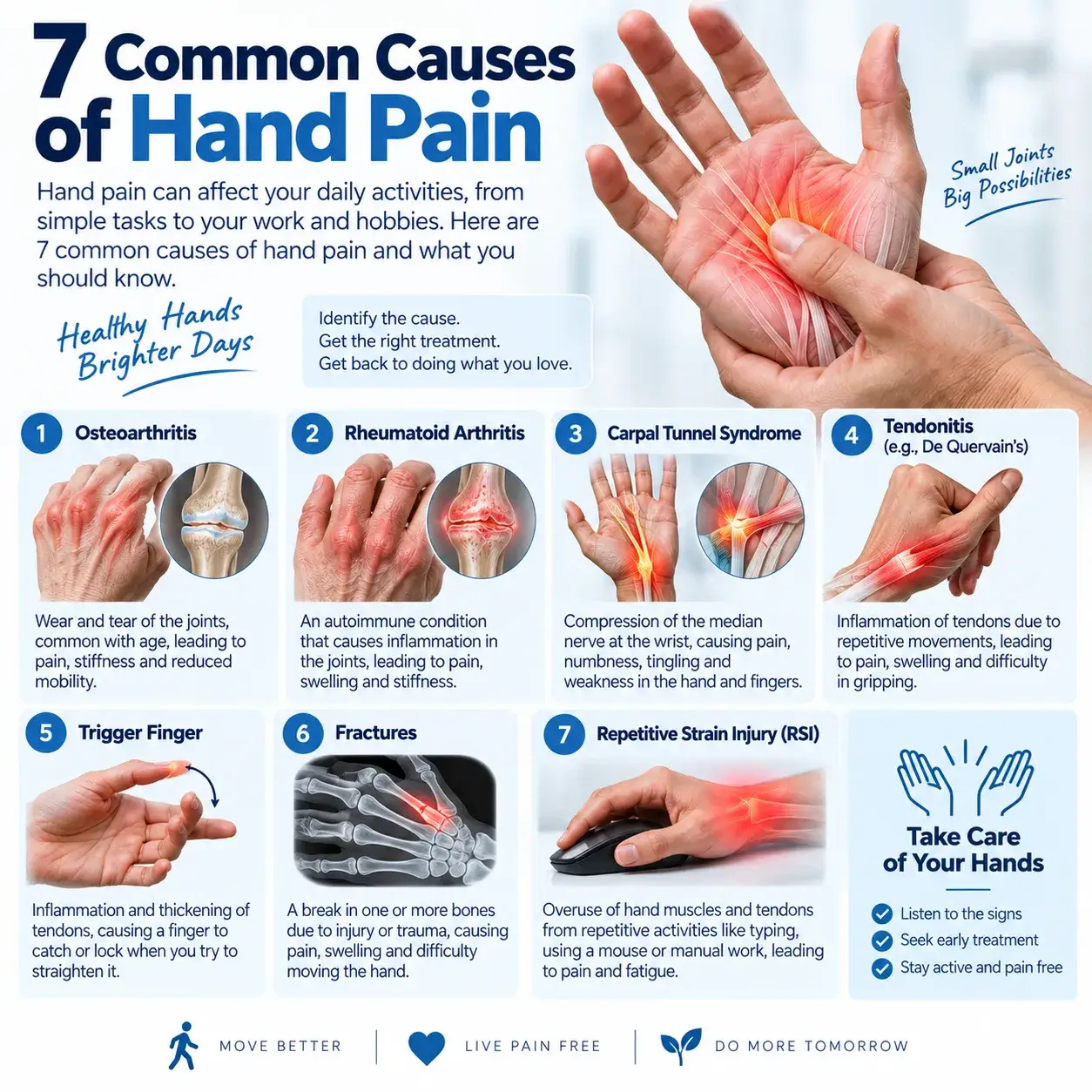
7 Common Causes of Hand pain
Hand Pain Causes
Human hands are complex structures with different types of bones. The joints and muscles in the hand help in allowing dexterous movements, gripping, and grasping ability. However, hand joints are susceptible to injuries. There are many causes of hand pain as different conditions can contribute to hand pain. Therefore, treatment depends on the cause and it may range from making lifestyle changes, to exercise and medications.
Hand pain causes
Hand pain reasons: Hand pain can begin in different parts of the complex structure such as nerves, tendons, connective tissues, joints, and bones. Among the several known causes of hand pain, these are the common ones: fractures and strains, repetitive hand movement-related injuries, nerve damage, inflammation, and many other chronic conditions such as rheumatoid arthritis, lupus, and others.
Some of the common hand pain causes include:
Peripheral neuropathy: It is associated with pain, weakness, and numbness in the hands. The causes include infections, metabolic problems, diabetes, and traumatic injuries.
Common symptoms include burning, freezing, throbbing, and sharp pain in the hands and feet; tingling sensation in hands and feet, extreme sensitivity in hands, and weakness.
Carpal Tunnel Syndrome
The median nerve runs through a tunnel-like passage of bone and ligament located at the base of the hand. Tendons responsible for moving your fingers also pass through this passageway. Squeezing of this median nerve due to a narrowing carpel tunnel can cause this condition. It happens when there is inflammation or irritation of tendons that causes swelling in the area.
The symptoms include frequent numbness, tingling, itching, and burning sensation in the palm of the hand and fingers. You will feel pain in the index and middle finger and around the thumb.
The other symptoms of carpal tunnel syndrome include reduced grip strength; stiffness and pain in the hand or wrist in the morning; pain during the night; difficulty feeling hot and cold sensations; difficulty in performing certain tasks and trouble grasping small objects.
Some of the common treatments for this condition include using ice and cold packs; avoiding certain activities; using splints; taking OTCs, stretching, and exercises; taking oral steroids or injections; and, in severe cases, surgery remains the best treatment option.
Arthritis
Arthritis is an inflammatory condition of the joints. There are different types of arthritis, but osteoarthritis and rheumatoid arthritis are the most common.
Osteoarthritis is a progressively deteriorating bone and joint condition that mostly affects older adults. The cartilage that covers the ends of bones is damaged due to wear and tear. When this happens the symptoms gradually manifest.
In rheumatoid arthritis, stiffness and joint inflammation leading to pain. It affects many joints of the body, but most commonly the joints of the hand and feet are affected.
Symptoms of arthritis include swelling around joints, morning stiffness and pain in the joints; pain due to overuse of joints; repetitive motion, burning pain or dull pain in the joints of wrist and fingers; small cysts on the end of fingers; overextensions (changes in joints); grating, grinding or looseness sensations around finger joints.
Treatment includes medication to relieve pain and swelling; use of splints during the time of overuse; physical or occupational therapy; use of long-lasting anesthetics or steroids.
Regular stretching and strengthening exercises help maintain healthy joints and improve hand function.
Lupus
It is an autoimmune disorder. The initial signs include joint pain, stiffness, and progressive inflammation. The other symptoms include fatigue, muscle pain, hair loss, an unexplained fever, swelling around the eyes or legs, and pale or purple fingers or toes.
Treatment can help manage the condition. It includes pain-relieving medications, the use of a warm or cold compress, physical therapy; avoiding painful activities, and resting painful joints.
Gout
It is an extremely painful joint condition and a complex type of arthritis. Most commonly it affects the joint at the base of the big toe, but it can also occur in the hands and wrists as well. The pain becomes unbearable and wakes you up at the night. In severe bouts of attacks, you will experience burning pain, redness, and tenderness. There are medicines to treat this condition.
Ganglion cysts
They look like a lump or mass coming out of the back of the wrist. They look unsightly but are not painful. When they become large, they can put pressure on the nerves and cause numbness, tingling, and pain in and around the hand or wrist.
These cysts usually don’t do any harm as they can go away with time. Using splints and taking rest can reduce their size. However, if they become large and cause pain, your orthopedic doctor will remove them.
De Quervain’s tenosynovitis
In this condition, tendons around the base of the thumb swell and cause inflammation. You will experience pain, numbness, and swelling around the base of the thumb due to the build-up of pressure on the nerves.
Symptoms of de Quervain’s tenosynovitis include swelling near the base of the thumb, pain around the thumb-side of the wrist; trouble making a pinching motion or grasping something.
The treatment for this condition may include the application of cold or ice packs; splinting; avoiding pinching motions and painful tasks; taking OTCs; occupational or physical therapy; use of steroid injection and in severe cases, surgery.
Bottom Line
In addition to these, there are many more hand pain causes, if you have any of the above symptoms related to your hand and wrist, don’t delay in seeking medical help. Consult Dr. Praharsha Mulpur for a comprehensive diagnosis and effective treatment of your hand pain.
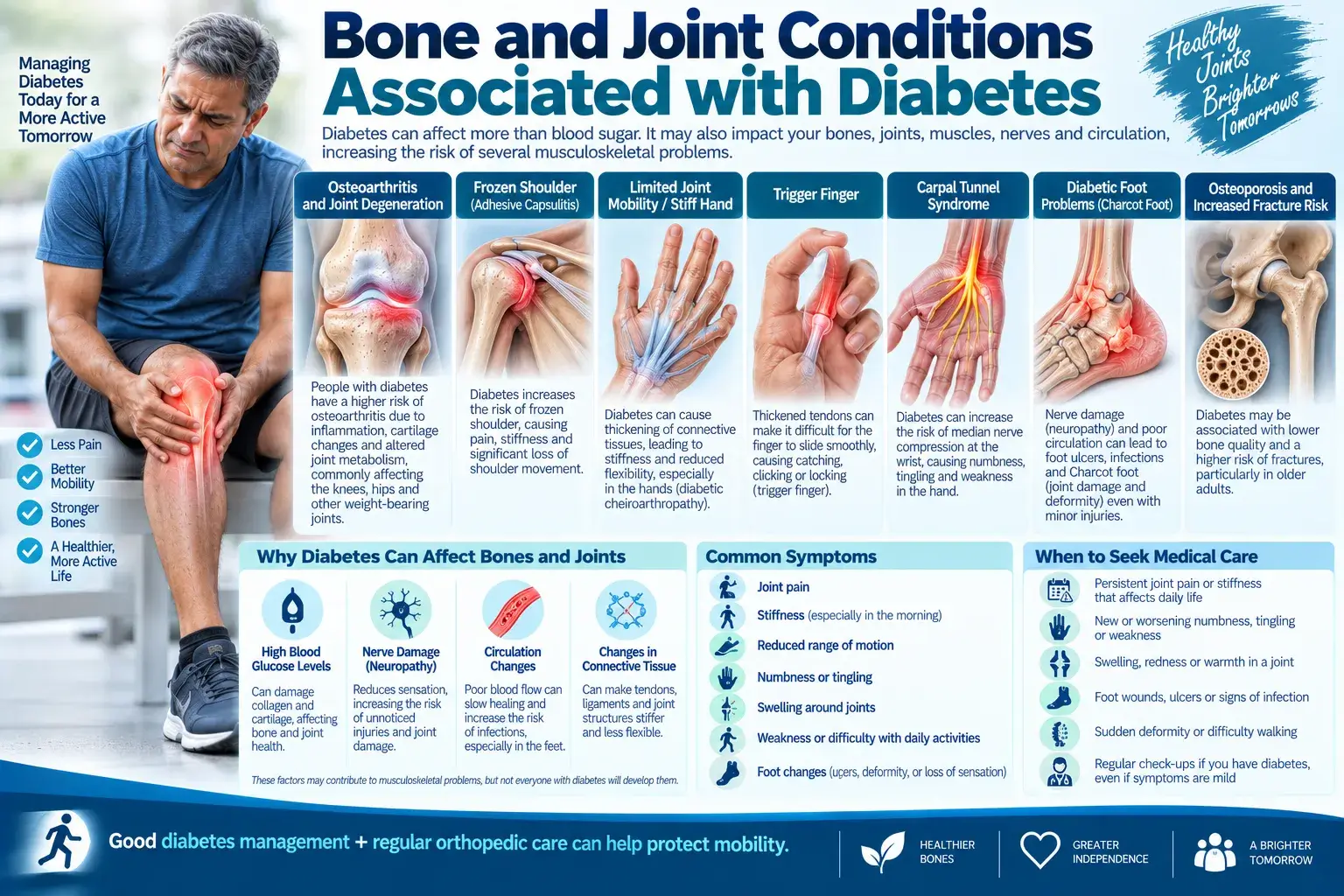
Bone and Joint Conditions in Diabetes- Part 2
Diffuse idiopathic skeletal hyperostosis (DISH)
Diabetes and Bone Problems Another skeletal disease associated with type 2 diabetes is Diffuse idiopathic skeletal hyperostosis (DISH). In this condition, so the ligaments and tendons harden. This occurs mostly in the spine region. In this condition, insulin or insulin-like growth factors promotes new Bone Growth.
What are the symptoms of Bone Problems?
Because DISH mostly affects the spine. In this case, you may experience stiffness in the neck or back. In general, in this condition, you may experience decreased range of motion, stiffness, or pain in the affected part of the body.
How is DISH treated?
Treatment involves managing symptoms, usually with pain relievers such as ibuprofen and acetaminophen, and corticosteroid injections.
Dupuytren’s contracture
Scarring and thickening of connective tissue in the palm of the hand cause Dupuytren’s contracture. But one or more fingers bent towards the palm due to deformity. People with diabetes have this condition if they have had uncontrolled diabetes for a long time. The condition may be due to metabolic changes related to diabetes.
What are the symptoms of Diabetes related bone Problems?
Diabetes and Bone Problems Skin on the palm of the hand thickens leading to stiffness of the palm and fingers of the hand. It is difficult to fully straighten one or more fingers.
How is it treated for Diabetes Problems?
This condition, in severe cases, makes it difficult for you to perform daily activities – such as grasping objects. Therefore, doctors perform a minimally invasive procedure called aponeurotomy to break apart the thick skin tissue. Collagenase enzyme injection and surgery are the other treatment options. Doctors give steroid injections to help reduce pain and inflammation.
Frozen shoulder
This condition commonly affects one shoulder. o The most common risk factor for this condition is diabetes although a well-established cause is often unknown.
People often approach an orthopedic doctor if they experience mild to moderate pain, stiffness and restricted movement in the shoulder joint. The doctor may give glucocorticoid injections to ease symptoms if they are severe. However, physical therapy is beneficial. It helps in easing movement and preserves a wide range of motion in the shoulder joint.
Osteoarthritis
In this degenerative joint disorder, joint cartilage breaks down. Osteoarthritis can affect any joint in the body. People with uncontrolled and long-time diabetes have an increased risk of developing osteoarthritis. Excess body weight (obesity) is the major risk factor for type 2 diabetes.
Symptoms of Osteoarthritis
Swelling and stiffness, joint pain, and also loss of joint flexibility or movement are some of the common symptoms of osteoarthritis.
Treatment for Diabetes and Bone Problems
Maintaining healthy body weight, involvement in regular exercise, resting and taking care of the affected joint, medication for relieving pain and physical therapy may help ease symptoms. To manage pain, massage therapy and acupuncture may be helpful. In severe cases of hip and knee osteoarthritis, hip and knee replacements may be recommended.