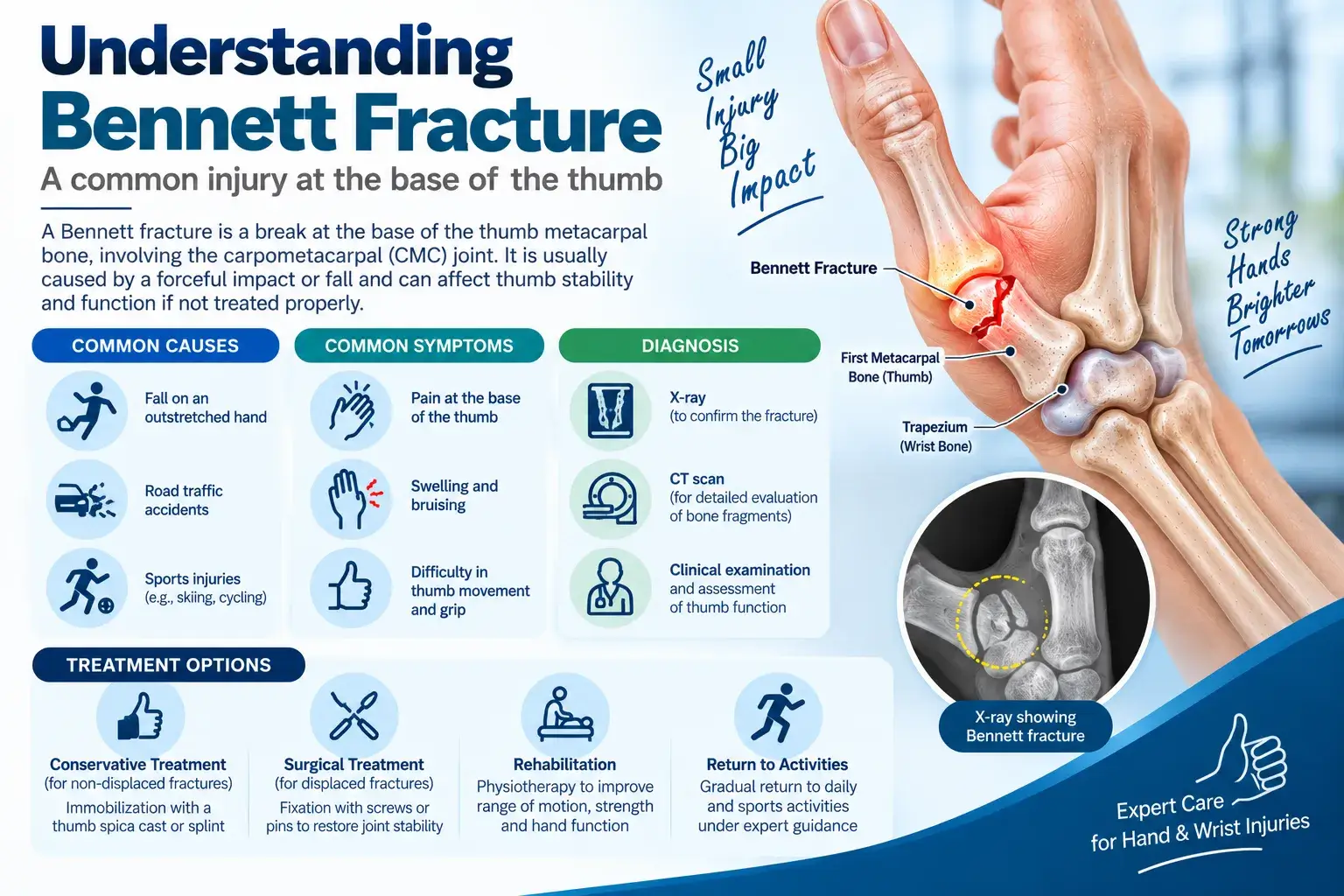
A Bennett fracture is a specific type of fracture that affects the base of the thumb near the wrist joint. It falls under the category of intra-articular fractures, meaning the break occurs within the joint surface. The thumb is a complex structure comprising two bones called the metacarpal and the proximal phalanx. A Bennett fracture typically involves the base of the first metacarpal bone, where it connects with the carpal bones of the wrist.
Signs and Symptoms
The most common signs and symptoms of this type of fracture include pain, swelling, and difficulty in gripping and moving the thumb. The affected area may also show visible deformity, such as a depressed or misaligned joint. In some cases, there may be bruising or discoloration around the fracture site.
Diagnosis
To diagnose a Bennett fracture, an orthopedic doctor will perform a thorough physical examination of the thumb. They may also order imaging tests, such as X-rays, CT, or magnetic resonance imaging (MRI), to get a clearer view of the fracture and assess the extent of the damage. If the fracture is displaced, a visible deformity is prominent. A typical case of Bennett’s fracture may present with pain, swelling, decreased grip strength and decreased pinch grasp; tenderness to touch; warmth over the area in acute phase.
Treatment Options
Here is the active-voice version, with the passive constructions removed and the meaning preserved:
The treatment approach for this type of fracture depends on various factors, including the severity of the fracture and the patient’s overall health. In less severe cases, such as stable and non-displaced fractures, doctors may use non-surgical methods such as a cast or splint to protect the thumb. However, complex fractures may require surgery to realign the bones and stabilize the joint with wires, pins, or screws.
Recovery and Rehabilitation
After treatment, your doctor may place your thumb in a cast, splint, or specialized brace to protect the fracture during healing. Once the fracture heals sufficiently, your doctor or physical therapist will begin a physical therapy program to restore strength, range of motion, and function in the thumb.
The duration of recovery can vary depending on the individual and the severity of the fracture.
Potential Complications
If not treated promptly or managed properly, this type of fracture can lead to certain complications. These include malunion, where the bones heal in an incorrect position, post-traumatic arthritis, which causes joint pain and stiffness, and decreased grip strength due to muscle weakness or scarring.
Preventing Bennett Fractures
While accidents cannot always be prevented, there are measures one can take to reduce the risk of Bennett fractures. This includes practicing proper hand safety techniques when engaging in physical activities or sports that involve hand movements. Regularly performing hand and wrist exercises can also help improve strength and flexibility, making the thumb more resilient to injuries.
Conclusion
Bennett fractures are injuries that occur at the base of the thumb and can cause significant pain and functional impairment. Proper diagnosis, timely treatment, and appropriate rehabilitation play crucial roles in achieving a successful recovery. By understanding the causes, symptoms, treatment options, and preventive measures associated with Bennett fractures, individuals can make informed decisions regarding their hand health and overall well-being.
FAQs
1. What are the common causes of Bennett fractures?
Bennett fractures often occur due to a forceful impact or trauma to the thumb, such as a fall onto an outstretched hand or a direct blow.
2. How long does it take to recover from a Bennett fracture?
The recovery time for a Bennett fracture varies depending on the severity of the injury and individual factors. It typically takes around 6 to 12 weeks for the fracture to heal, but the complete recovery of strength and function may take several months.
3. Can a Bennett fracture heal without surgery?
In some cases, non-surgical treatments like immobilization with a cast or splint can promote healing and restore function. However, complex or displaced fractures often require surgical intervention for proper realignment and stabilization.
4. Is physical therapy necessary after a Bennett fracture?
Physical therapy is highly recommended after a Bennett fracture. It helps restore thumb mobility, strength, and coordination, enhancing the overall recovery process and preventing complications.
5. What can I do to prevent Bennett’s fractures?
To reduce the risk of Bennett fractures, practice hand safety techniques during activities that involve hand movements, wear appropriate protective gear, and perform regular hand and wrist exercises to strengthen the supporting muscles and ligaments.
