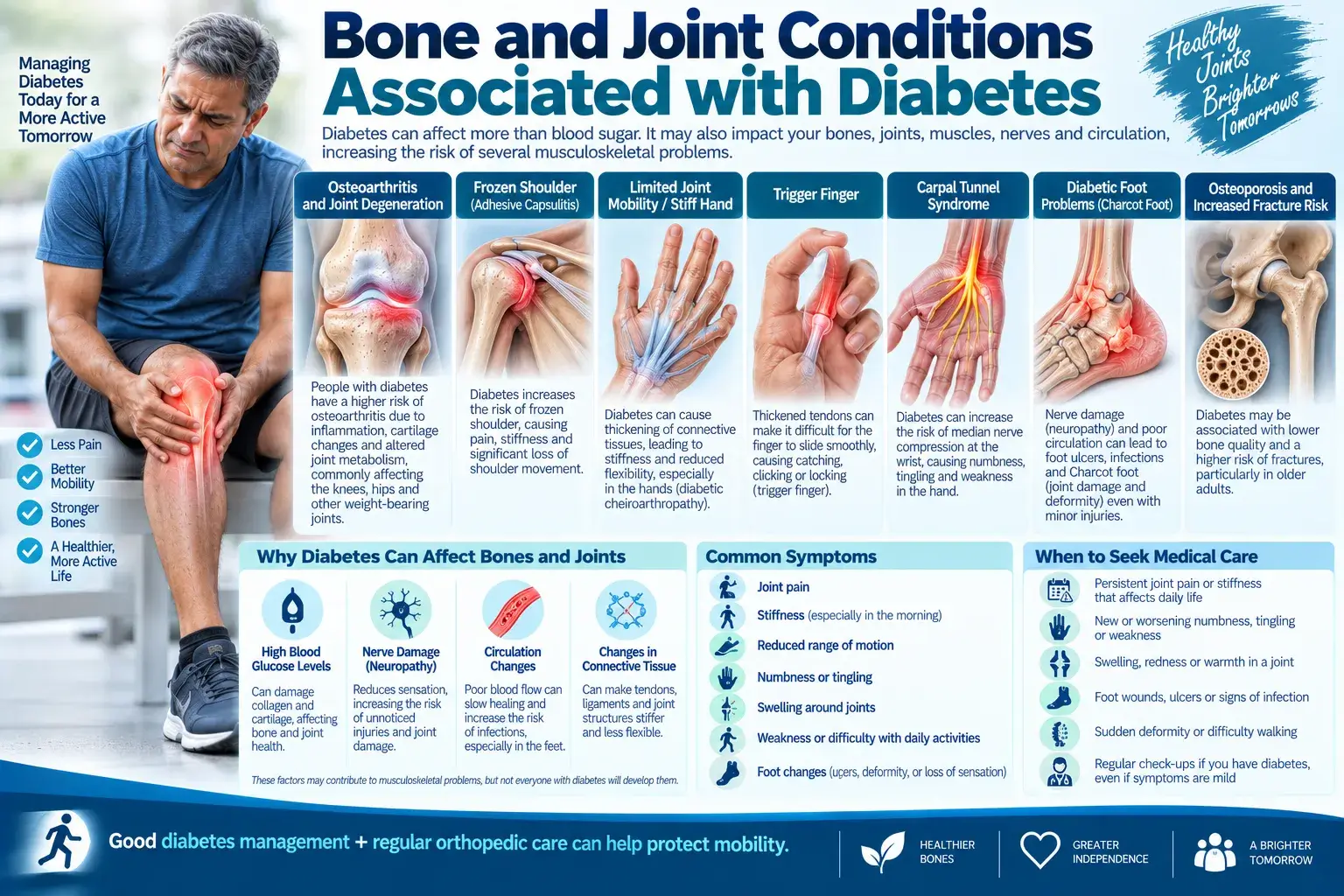
Bone and Joint Conditions Associated with Diabetes
Diabetes and bone problems By Dr. Praharsha
Diabetes is a silently damaging disease as it can lead to many serious health issues such as heart disease, kidney disease and nerve disease. These conditions can go hand in hand with diabetes. You may not be aware of the fact that diabetes can also lead to increased risk of bone and joint conditions. The risk increases manifolds in people who have arterial disease, obesity and diabetic neuropathy. Let us try to understand different types of joint and bone conditions along with their symptoms. Diabetes and bone problems.
What is neuropathic arthropathy?
Nerve damage is the common complication of diabetes. A joint deteriorates due to this problem. This is one of the commonest complications of diabetes. The condition is best known as neuropathic arthropathy or Charcot joint. It primarily affects the feet.
What are the symptoms?
If you have this condition, you may experience loss of sensation or tingling sensation in the affected joints. You may also have numbness and the affected area might feel like red and swollen, warm and also become deformed or unstable. Though the joint appears to be bad in appearance, you may not feel severe pain.
How is it treated?
When this condition comes to your notice early, once your Orthopedic doctor diagnoses it, it is possible to slow it down. You can slow the progression of this condition by using orthotic supports and by limiting weight-bearing activities. Protecting the affected joints and surrounding structures can help.
What is Diabetic hand syndrome?
Diabetic cheiroarthropathy or diabetic hand syndrome is a condition that restricts or limits joint mobility. It mostly affects the small joints of the hands. It causes stiffness of the joints.
Initially hands joints come into its fold – and then, slowly shoulder, feet and ankles’ joints get effected. Hands skin can become thick and waxy with the restricted finger movement. The cause of limited joint mobility is not known. However, people with diabetes are more prone to this condition – especially those who have had diabetes for a long time.
What are the symptoms?
You may have restricted fingers movement. Therefore, you may not be able to extend your fingers fully. Even pressing your palms together flat becomes difficult.
What is the treatment for this condition?
Management of diabetes is very important to control this condition. Regular stretching and strengthening exercises can help maintain joint mobility and improve overall joint health. In addition, physical therapy helps in slowing down the progression of this condition. Many people may not able to regain complete movement of their fingers.
What is Osteoporosis?
In osteoporosis bones become weak and lose strength. The causes of weak and brittle or fragile bones can be many including vitamin D deficiency, calcium deficiency, kidney and liver problems. Diabetes is also one of the risk factors for osteoporosis. People with type 1 diabetes are at increased risk of osteoporosis.
What are the symptoms?
Many people who develop this bone condition don’t have any symptoms in the beginning. The only way by which the condition comes to limelight is after bones get fractured. However, in some advanced stages of the disease some people experience loss of height, broken bone and stooped posture.
How is it treated?
Knowing the underlying cause is important for prompt and effective treatment of osteoporosis. For instance, hormonal imbalances in women and men and kidney disease can also cause osteoporosis. However, low calcium levels and vitamin D deficiency are the main causes. Persistent bone or joint pain should always be evaluated by an orthopedic specialist to identify the underlying cause. Therefore, the best way to manage osteoporosis is taking supplements, making dietary changes, doing weight-baring exercises, walking and eating diet rich in calcium and vitamin D. In more chronic and severe cases, doctors prescribe supplements and medications, injections to prevent further bone loss and increase bone mass. Diabetes and bone problems go hand in hand – therefore, even in the absence of symptoms, you should always get your bone health checked.
To be continued in the next post…
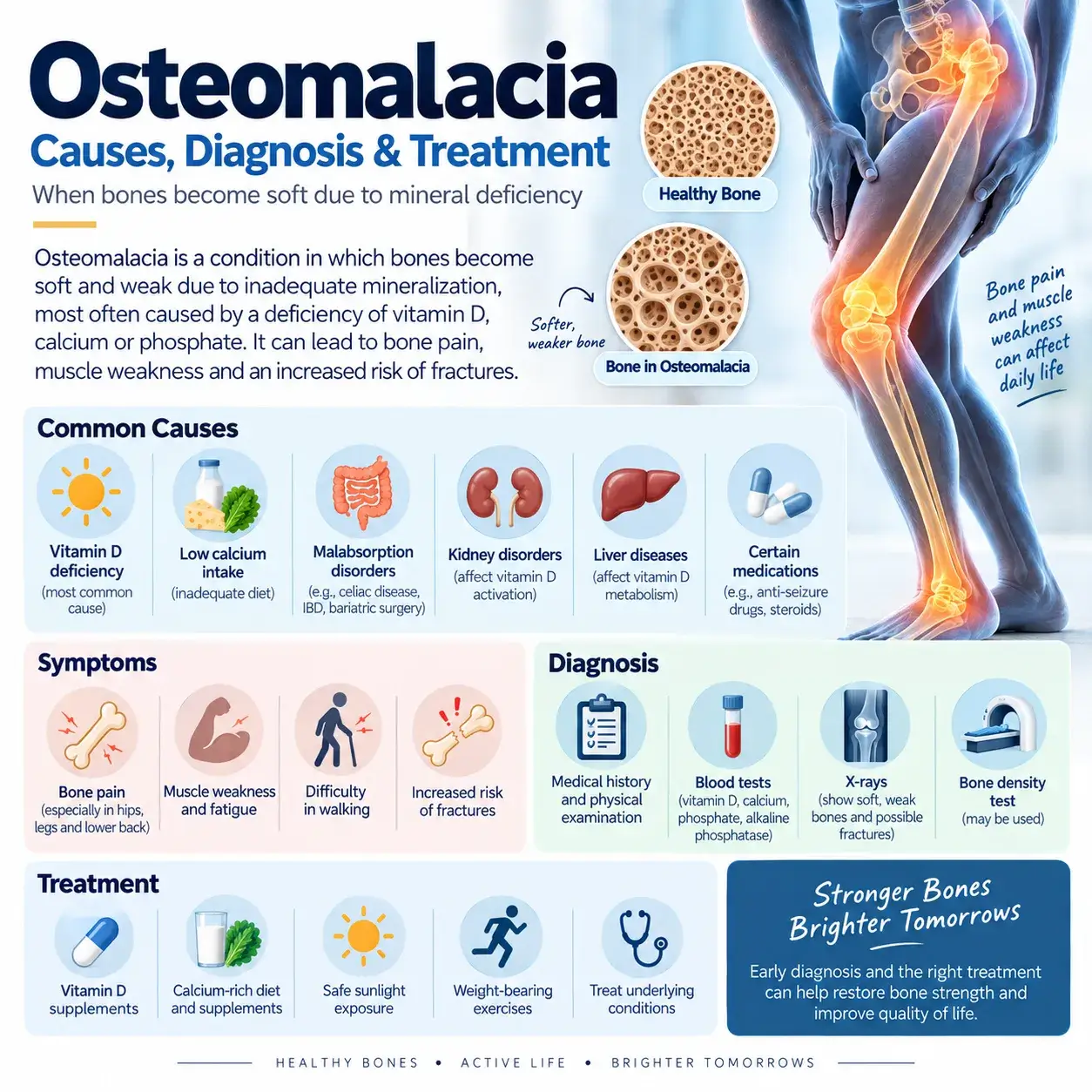
Osteomalacia Causes, Diagnosis & Treatment
Osteomalacia Causes
Osteomalacia is a condition in which bones become soft and weak. This condition has become very common nowadays both in men and women. Compared to men, women are at increased risk.
Osteomalacia causes: The most common cause of osteomalacia is vitamin D deficiency – which leads to low blood calcium levels. Inadequate levels of calcium in the blood can lead to soft and weak bones.
Symptoms and Risks
Those who develop this condition have weak muscles, weaker bones, bone pain, bowed legs, and brittle bones. They are at increased risk of BONE FRACTURES.
In children – The inability to utilize vitamin D or deficiency of vitamin D can lead to a condition called osteomalacia which leads to rickets.
Osteomalacia Causes
Vitamin D Deficiency
A major source of vitamin D is the one that is produced by the skin on exposure to sunlight. The other source of vitamin D is food – such as milk, fish, eggs, poultry, and meat. Low vitamin D levels or inadequate vitamin D or deficiency of vitamin D occurs in the following cases:
- People who work indoors during the daylight hours
- Women who use a very strong sunscreen
- Individuals with dark skin pigmentation
- Women who wear complete body-covering clothes
- Women and men who avoid daylight
- People who work most of the time indoors
- Women who remained confined to their homes
- People who live in climatic conditions where there is the least exposure to sunlight.
Some people may not get enough vitamin D from their diet if they:
- Have undergone stomach surgery – such as bariatric surgery or intestinal surgery
- Follow a strict vegetarian diet
- Don’t drink milk and milk products (commonly seen in adults)
- Have trouble digesting milk products (lactose intolerance)
What are the other causes of osteomalacia?
The other osteomalacia causes include the following:
- Excessive use of medicines especially the ones that are used to treat seizures
- Acidosis and kidney failure
- Rare types of kidney cancers that lead to low levels of phosphates
- Chronic and end-stage kidney disease
- Lack of enough phosphates in the diet
- Digestive system disorder
- The inability of the liver to convert vitamin D to its active form is due to liver disease.
How is osteomalacia diagnosed?
Doctors order the most common and basic tests to check the levels of vitamin D, calcium, and phosphates. People with persistent bone pain or joint pain should undergo a proper orthopedic evaluation to identify the underlying cause.Low levels of vitamin D, calcium, and phosphates indicate osteomalacia. X-rays and bone density scans are helpful in evaluating the amount of calcium and other minerals in bone. Low bone density scans indicate osteomalacia.
How is osteomalacia treated?
Doctors suggest proper sunlight exposure and dietary intake if the cause is vitamin D and calcium deficiency. If weak bones lead to fractures or severe joint damage, your orthopedic surgeon may recommend surgery depending on the underlying condition. People who have developed the condition due to malabsorption of nutrients through the intestines should take larger quantities of calcium and vitamin D supplements. It depends on the individual case.
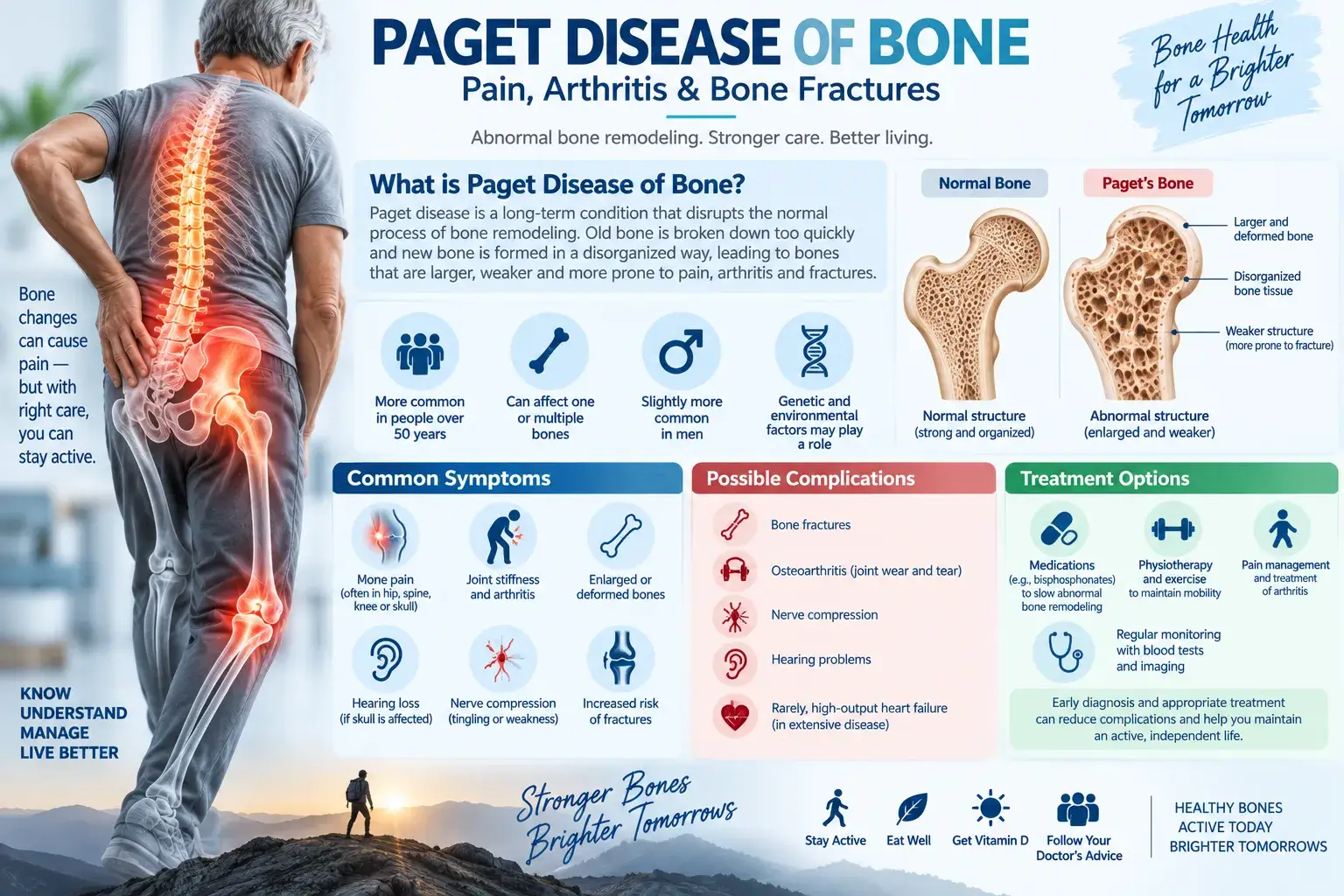
PAGET DISEASE OF BONE – Pain, Arthritis & Bone Fractures
Paget disease of bone is a degenerative disease of bone. It is a chronic bone disorder wherein bones deform and break down excessively. Though bones become enlarged, they become dense, fragile, and deform. Though it is a common disorder in older adults after age 50 or more, many people silently suffer from it. However, over the past several years Paget disease has become less common and less severe when it develops.
What are the signs and symptoms of Paget Disease of the bone?
- Bone and joint pain
- Bone Deformity
- Arthritis
- Risk for bone fractures
- In very rare cases, Paget disease may lead to bone cancer
If the disease affects the pelvis bone, it can cause hip pain. Paget disease of the spine can cause back pain, weakness, numbness, and tingling sensation in the arms or legs.
Enlarged or misshapen bones in the joints can cause extra pressure, force, and stress on hip and knee joints – leading to hip and knee arthritis.
Paget disease symptoms mimic the signs and symptoms of other orthopedic conditions. Talk to your orthopedic doctor for an accurate diagnosis of the condition.
What causes Paget disease of the bone?
Paget disease is mostly idiopathic. Experts are still unsure about the exact cause of Paget disease. However, genetics and environmental factors could play a role.
Diagnosis of Paget Disease of the Bone
Your orthopedic doctor evaluates your medical history and performs a physical examination based on your signs and symptoms – and may recommend the following tests:
X-ray
Bone Scanning – It is a nuclear scanning wherein a tracer material (radioactive) is injected into the blood. Next, scanning is done to detect the tracer material within the bones. Bone scanning test helps in detecting blood flow to the bone and cell activity.
Bone Biopsy – Doctors perform this procedure using a needle and sedation. Doctors also do bone biopsies by making small incisions. Bone biopsies help in determining the cause of bone disease.
Blood tests – Doctors check the levels of alkaline phosphatase in the bone. Increased activity of bone cells or bone growth increases its levels. The enzyme levels increase in Paget disease.
Treatment for Paget Disease of the Bone
Your orthopedic doctor comes out with the best treatment plan based on the medical history, overall health, sickness levels, the duration of your illness; your ability to bear specific procedures, medicines and therapies, and other such factors.
The treatment is aimed at strengthening your bones and muscles and slowing down the abnormal bone resorption. Your orthopedic doctor would recommend physiotherapy and prescribe medicines to manage pain and inflammation. The doctor may also prescribe bisphosphonates to slow down abnormal bone resorption. This is, in fact, the mainstay of treatment. To get relief from the symptoms due to abnormal growth of bones, your orthopedic doctor may recommend surgery to realign, cut or replace affected bone.
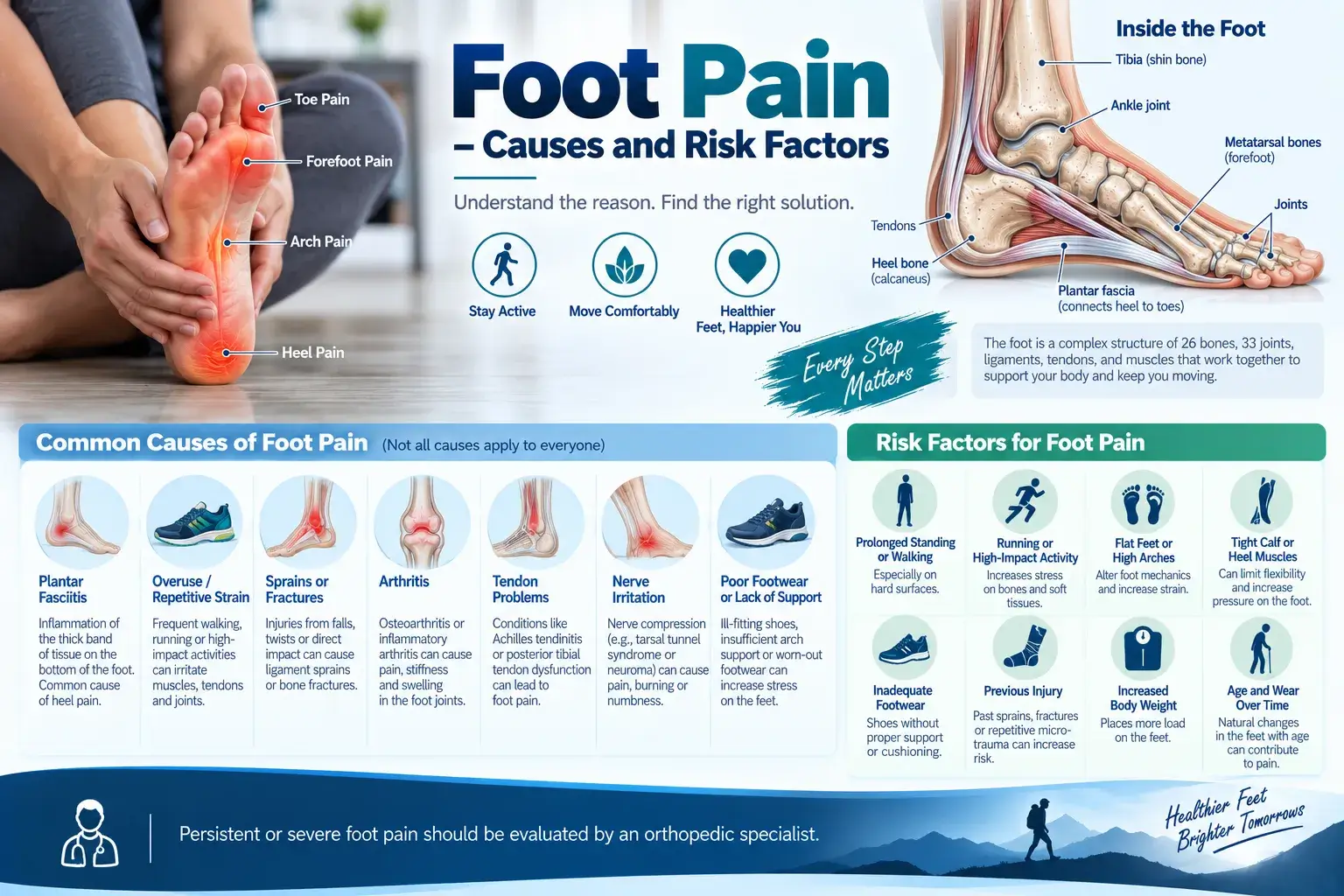
Foot Pain – Causes and Risk Factors
Foot Pain – Causes and Risk Factors
Foot pain causes
Your feet are important for you as they bear the entire weight when you move, walk, or wherever you go. They are prone to get strained or stressed if you overuse them. A majority of people don’t think much about foot pain until it hurt and causes limited mobility or movement. But, when your feet hurt, you want immediate relief.
Knowing the cause of the problem is important to get the right treatment. Persistent foot pain may also affect your joints and walking pattern, making it important to understand the common causes of joint pain. The location of the pain is also important to know the cause. Overuse, injury, or any other conditions that cause inflammation in tendons, ligaments, and bones can cause foot pain.
Your foot is the most complex part of your body. Keeping your feet and joints healthy through regular exercise, proper footwear, and weight management can reduce the risk of long-term joint problems. It has many muscles, joints bones, ligaments, and tendons. Foot pain is any discomfort or pain in one or more parts of your foot – such as soles, arches, heels, or toes.
Foot pain causes (Lifestyle Factors)
If you get foot pain, see whether you are wearing proper footwear. High-heeled sandals or shoes can cause foot pain as they put a great deal of pressure on the toes. This is, in fact, one of the prominent causes of foot pain in many people. And also check your activity levels including high-intensity exercises, intense aerobics, jogging, and weight-bearing exercises. These activities can also lead to foot pain if you get an injury during workouts.
What are the common medical causes of foot pain?
There are many medical problems associated with foot pain. Arthritis pain is the main cause of foot pain in many people. Arthritis can affect any of the 33 joints in the foot.
People with uncontrolled diabetes can develop several disorders and complications associated with the foot. They can become prone to:
- Foot sores or ulcers
- Nerve damage in the feet
- Hardened or clogged arteries in the feet and legs
Who are at risk of developing foot pain?
The following category of people are at risk for developing foot pain:
- Obese or overweight people
- Pregnant women
- People who have foot sprain, strain, fracture or foot injury, or tendinitis
What are the other potential causes of foot pain?
The other potential foot pain causes include:
Gout (commonly affects the big toe near the ball of the foot)
Fallen arches
Peripheral arterial disease (PAD)
Athlete’s foot
Hammer toes
Medications
Ingrown toenails
Warts
Bunions
Calluses
Corns
Haglund’s deformity (the back of the heel bone enlarges)
Morton’s neuroma (It is thickening around the nerve tissue between the toes near the ball of the foot)
When should you see your doctor?
If your foot pain triggers by certain activities, you must pay attention. If you know what triggers your foot pain, you will know better ways to manage it. However, you should not ignore your foot pain in the following circumstances:
- Your foot pain is due to a recent injury
- If the pain is sudden and severe
- You find it difficult to put weight on your foot.
- You have injured your leg owing to which you cannot put weight on your foot.
- If an open wound in your foot is causing pain
- The painful area has got discolored and has developed inflammation
- You have a fever in addition to foot pain.
- Your medical condition is interfering with blood flow due to which you are experiencing foot pain.
If your pain persists despite medication, physiotherapy, and other conservative treatments, you should understand when surgery is required for joint pain.
In the above cases, irrespective of whether you know your foot pain causes or not, you must see an expert orthopedic doctor to rule out any complex problem associated with your foot.
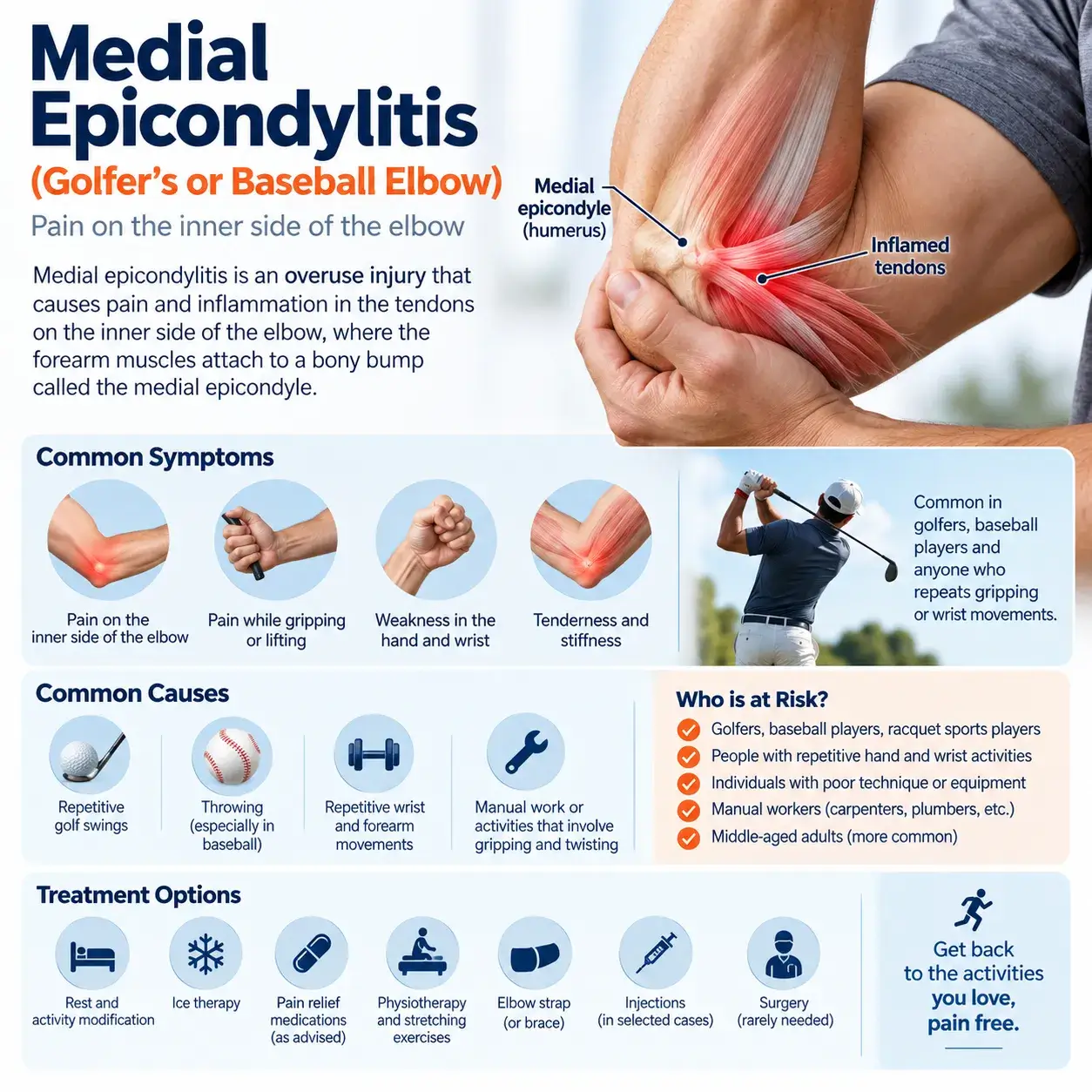
Medial Epicondylitis (Golfer’s or Baseball Elbow)
Golfer’s elbow causes | symptoms and treatment
You are well aware of tennis elbow. Golfer’s elbow or medial epicondylitis is quite opposite to the tennis elbow in terms of its effects. In this condition, you feel pain inside the elbow in the region of the bony bump due to cumulative damage and irritation in the tendons. These tendons attach to the muscles of the forearm. Whereas in tennis elbow, you feel pain outside of the elbow.
Is Golfer’s Elbow associated with Golfers Only?
Many people think that this condition is confined only to golfers, but it is not the case. Many active individuals and competitive athletes can develop this condition.
Forearm muscles and tendons help your wrist and fingers to move, twist and grip objects – such as a hammer, tennis racket, golf ball, or tennis ball. If you develop a golfer’s elbow, you may feel pain and difficulty gripping objects and playing. Affected individuals often experience pain or soreness at the inside of the elbow during or after activity.
What causes the golfer’s elbow?
Golfer’s elbow causes: Damage to the tendons and muscles that control wrist and finger movement causes golfer’s elbow (medial epicondylitis). People who are involved in forceful finger and wrist motions are subjected to repeated or excess stress. Repeated twisting and forceful gripping activities, poor conditioning, not doing warmup before any sporting activity; improper hitting, throwing, or lifting can lead to a golfer’s elbow.
People with persistent elbow pain should also learn about tennis elbow treatment, as both conditions affect the elbow tendons due to repetitive use.
What are the signs and symptoms of medial epicondylitis?
Golfer’s elbow symptoms: You may feel pain and tenderness in the funny bone region or in the bony bump. The pain is progressive and may radiate to the forearm. The pain can come on suddenly or gradually.
In the beginning, pain mainly occurs after activity, but may begin to interfere with activity. Once the pain starts to interfere, it will become difficult to pick up objects and grip door handles.
Another symptom is morning stiffness in the elbow or after a period of inactivity. You will feel stiffness when the elbow is fully straightened and slightly bend. Poor grip strength associated with pain
Golfer’s elbow causes and symptoms: Tingling sensation, numbness, and swelling are uncommon unless there is an injury. However, when the ulnar nerve that passes near the tendons gets irritated, you may feel pain, numbness, and tingling sensation in the fingers.
What is the treatment?
The goal of treatment is to identify and treat the cause (which is usually overuse or poor technique), reduce the pain and irritation, promote healing, and strengthen the muscles and tendons to prevent a recurrence.
Regular stretching and strengthening exercises can improve joint function and help prevent future injuries.
When to see a doctor?
The first line of care is the use of over-the-counter pain relievers, the application of ice packs, and taking rest. Even after taking these measures if the pain and tenderness don’t ease, then seek a consultation with an orthopedic doctor who specializes in sports medicine. If your symptoms continue despite conservative treatment, you should know when surgery is required for joint pain.You must immediately seek care if:
- Elbow pain is severe and you can’t bend your elbow
- The elbow looks deformed
- Your elbow has swelling
- You have a fever with a swollen, hot, and inflamed elbow
- You suspect you’ve broken a bone
