Hip Fracture Treatment in Hyderabad | Dr. Praharsha Mulpur
When the hip bone breaks hip fracture results. It mostly happens in the upper part of the hip bone (femur). Hip bone is the strongest bone, but can become weak in the elderly people due to osteoporosis. Therefore, even young people can become prone to hip fractures. In young people hip fractures can be due to severe fall and collision events – such as vehicle accidents.
The Hip Joint
Hip joint is a ball-and-socket joint. The upper part of the femur (thighbone) is the head (the ball). The part of the pelvis bone that is socket like is called acetabulum (rounded shape that fits around the femoral head).
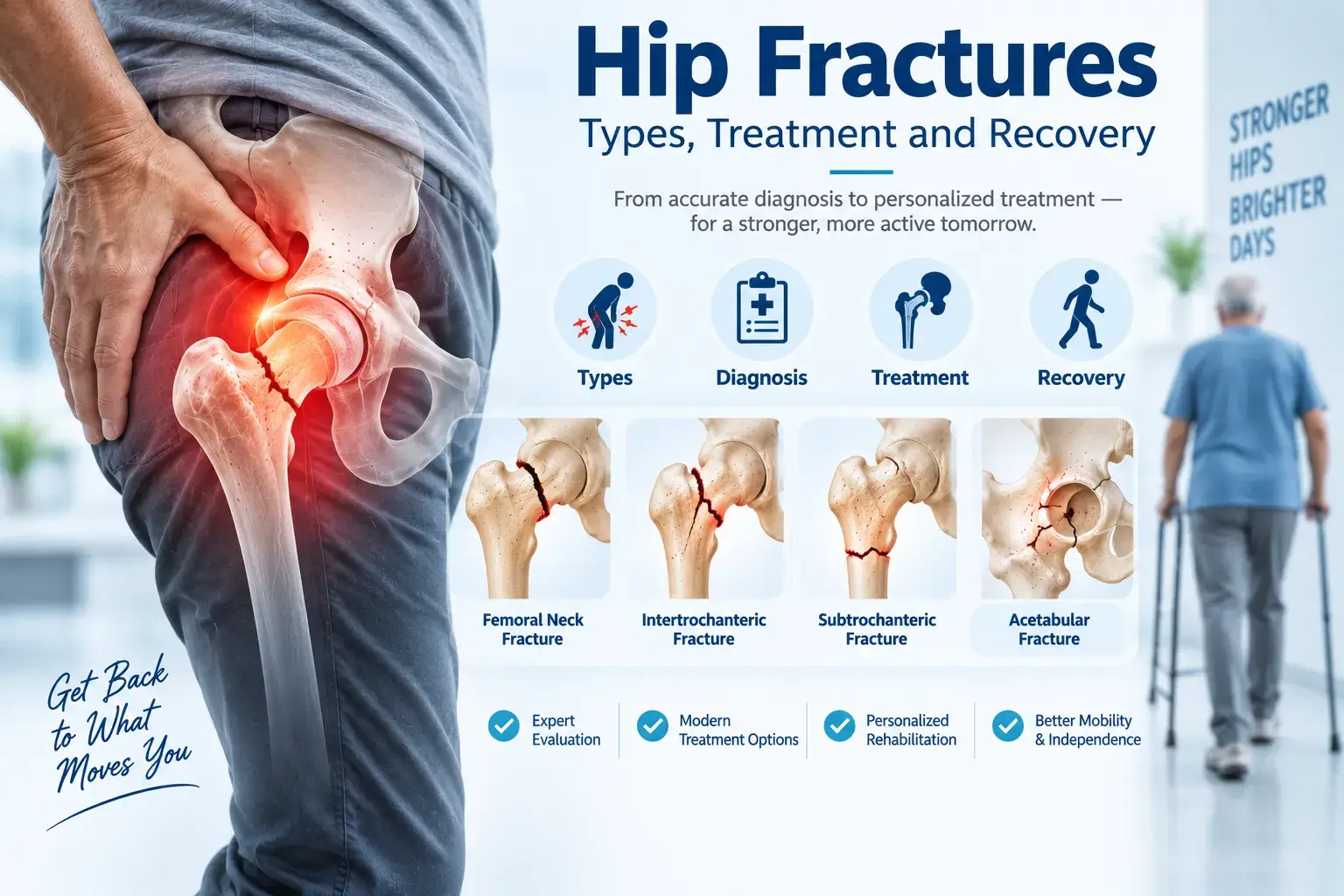
Hip fracture types
Hip fractures due to injuries can occur in any of the following areas of the upper femur:
Femoral head: It is the ball of the femur that sits in acetabulum. The fractures of this type are extremely rare and may occur only when there is a high-impact or high-velocity even -such as road accident.
Femoral Neck: The femoral neck lies below the femoral head. Femoral neck fractures represent one of the most common types of hip fractures.
Intertrochanteric Area: This area lies above the femoral shaft and below the femoral neck. Doctors call it the intertrochanteric area because it lies between two bony landmarks: the lesser trochanter and the greater trochanter. Intertrochanteric fractures also rank among the most common types of hip fractures.
Subtrochanteric Area: This area forms the upper part of the femoral shaft, just below the greater and lesser trochanters.
Hip Fracture Treatment in Hyderabad
Hip fractures often require surgery as early as possible to reduce the risk of complications. Before surgery, your orthopedic surgeon will assess your overall health and make sure you can safely undergo the procedure. As part of this evaluation, a cardiologist and pulmonologist may examine you when necessary.
Doctors call this process preoperative optimization. In addition, your medical team should complete the necessary preoperative tests within 48 hours.
Hip fracture recovery
Physical and occupational therapists will work with the patient after surgery during the recovery period. They will show some exercises and tell the patient about the amount of weight they can put on the leg. They will also give instructions on how to manage daily activities – such as dressing and bathing.
Hairline hip fracture treatment
The first line home treatment or home remedy for a hairline fracture include RICE method – rest, application of ice, using compression and elevation. NSAIS’s are helpful to manage pain and swelling. If the pain and swelling doesn’t come down, you may need to see an orthopedic doctor. The treatment may depend on the extent, location and severity of bone injury. Your doctor may recommend using crutches to keep weight off the affected leg. Mild hairline fracture may heal on their own over a period of few weeks.
Hip fracture treatment without surgery
Isolated fracture of the greater trochanter: It occurs due to low-impact events such as household fall. This type of hip bone fracture is often painful, it usually heals without surgery. Patients with this type of fractures are treated with weight bearing aids such as walker and crutches.
Hip fracture in elderly
Hip fractures are not very common in young people. If they occur in young adults, they may be due to high-impact forces and events -such as fall from a height or motor-car or motor-bike accidents. In the elderly people bones become weak due to loss of mineral density related to age and osteoporosis and other health conditions.
Hip fracture X-ray
Most of the hip fractures can be diagnosed with X-rays.
MRI (Magnetic Resonance Imaging) Scans. For a more detailed visualization of fractures MRI provides fine images with complete details. It is helpful in detecting damage to soft tissues and bones. MRI scans are very sensitive as they can help detect an incomplete or small fracture that can not be seen on an X-ray.
CT scans – Computerized Tomography scans help provide detailed and clear images of the hip joint (cross-sectional images). An orthopedic doctor order a CT scan to get more details about the fracture.
Bottom Line
Painful hip fractures need immediate medical care and surgical intervention to fix the bones as early as possible. The primary goal of an orthopedic surgeon is to get the patient out of the bed so that complications such as blood clots, bed sores, infections and pneumonia can be prevented. When elderly people take prolonged bed rest, it may lead to disorientation and therefore their rehabilitation becomes very difficult. If you have any doubts pertaining to hip fracture treatment in Hyderabad, book an appointment with Dr. Praharsha Mulpur.
