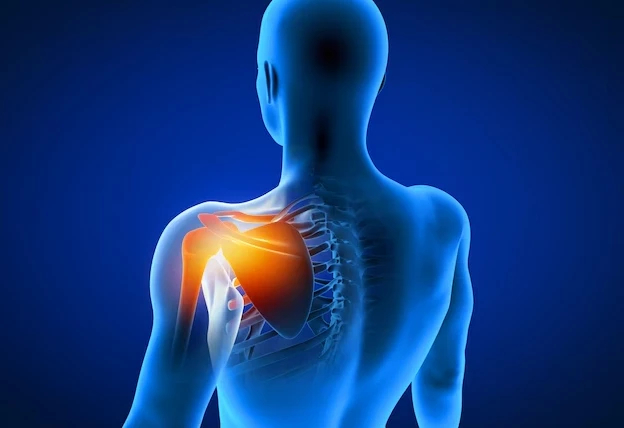
Frozen Shoulder – Symptoms Causes & Treatment
Frozen shoulder treatment in Hyderabad | Dr. Praharsha Mulpur
Frozen shoulder, also known as adhesive capsulitis, causes pain and significant stiffness that can progressively restrict shoulder movement. The Cambridge University Hospitals NHS Foundation Trust guide to frozen shoulder explains the symptoms, stages, diagnosis and treatment options, including physiotherapy, pain relief, injections and, in selected cases, surgery.
Adhesive capsulitis or Frozen shoulder – both these terms are used interchangeably. Frozen shoulder is a condition in which shoulder pain and stiffness are the prominent symptoms. The symptoms manifest rather slowly and then become worse over time. During this time, the affected shoulder becomes very difficult to move.
The symptoms altogether take a longer time to get better. People who develop frozen shoulders keep their shoulders stiff for a long time owing to which the condition becomes worse. Getting better from a worsened state usually takes a very long time.
Frozen Shoulder Develops in Three Stages
- Freezing Stage: During this first stage, the pain gradually becomes more and more intense. As the pain worsens, the shoulder loses its motion. A freezing stage may last for up to 45 days to 9 months.
- Frozen Stage: Pain eases somewhat during this period, but shoulder stiffness remains. This stage may last for up to 4 to 6 months. Performing daily activities may become a trivial task during this time.
- Thawing stage: Motion gradually starts to improve during this stage – and, it may come close to normal motion and strength – but, it may usually take around 8 months to two years.
Frozen shoulder Causes
There is no known cause of frozen shoulder as the causes are not fully understood. Even occupation or arm dominance doesn’t have any clear connection. However, there are some factors that can make a person at risk of developing a frozen shoulder:
Immobilization: When the shoulder is kept immobilized for a certain period of time after an injury, fracture, or surgery, a frozen shoulder may develop. Therefore, orthopedic doctors recommend their patients move their shoulders after surgery to prevent this condition.
Frozen shoulder symptoms
Shoulder pain is the most prominent symptom of a frozen shoulder. It is usually aching or dull pain that becomes intense when you move your arm. The outer shoulder feels painful and sometimes the upper arm as well. The other major symptom is a limited range of motion.
Diagnosis of Frozen Shoulder
Your doctor will discuss your medical history and symptoms and then examines your shoulder. Your orthopedic doctor will keenly observe whether you will feel pain when you move your shoulder. In this way, the doctor will check and compare both the active range of motion (when you move your shoulder on your own) and the passive range of motion (when someone else moves your shoulder). After making you move your shoulder in all possible directions your doctor will try to see whether your shoulder movement is restricted and whether you feel pain with motion.
Furthermore, to rule out other causes of your shoulder stiffness and pain, your doctor will order the following tests:
X-rays: To detect any structural issues and fractures in the bones and also problems such as arthritis, X-rays are helpful.
An Ultrasound and MRI: Soft tissue injuries can also cause pain and stiffness in the shoulder joints. To have clear and better images of soft tissues ultrasound and MRI tests are helpful. Though these tests don’t help in diagnosing a frozen shoulder, they help in identifying torn rotator cuff.
Frozen Shoulder Treatment in Hyderabad
Without treatment, the symptoms to improve may take a very long time – maybe up to 2 to 3 years. Therefore, the major goal of treatment is to control pain and restore strength and motion.
The treatment for a frozen shoulder involves medications, physical and occupational therapy with a range of activities and exercises, and the use of corticosteroid injections.
Primary treatment involves physical therapy with an aim to improve the flexibility of shoulder muscles.
Arthroscopic surgery is recommended in rare cases. This will help loosen the joint capsule so that it can move very easily.
The non-surgical treatment for frozen shoulder
Pain relieving medicines (NSAIDs) – Ibuprofen and aspirin help reduce pain, swelling, and inflammation.
Corticosteroid injections such as cortisone are directly injected into the shoulder joint. It is a powerful anti-inflammatory medicine.
Physical therapy – Some proven exercises help in restoring stiffness and motion. Physiotherapy is done under the supervision of a physical therapist through a home-based program.
Surgical Treatment
When typical conservative non-surgical treatment approaches such as medicines and physical therapy don’t offer any relief, then you should discuss with your orthopedic surgeon the scope for recovery while continuing with simple treatments and the benefits of considering shoulder surgery.
The goal of surgery is to stretch and release the stiffened joint capsule. Shoulder arthroscopy provides excellent outcomes.
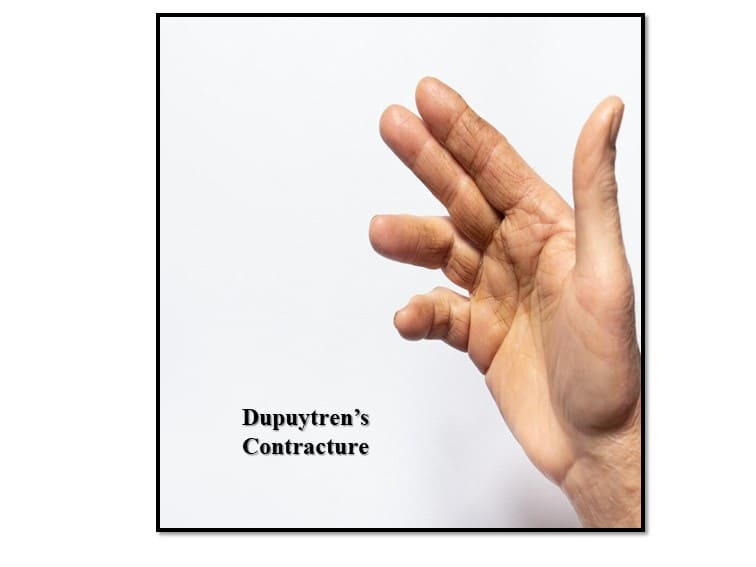
Dupuytren’s Contracture – Risk & Treatment
Dupuytren’s contracture is a condition in which fingers turn or bend towards the palm of the hand and do not straighten completely. In this painless condition, one or more fingers bend towards the palm.
Dupuytren’s contracture is a progressive condition affecting the tissue beneath the skin of the palm, which can cause one or more fingers to gradually bend toward the palm. The American Academy of Orthopaedic Surgeons (AAOS) information on Dupuytren’s disease explains the causes, symptoms, diagnosis, risk factors, and treatment options for this condition.
Description of the Dupuytren’s Contracture
The fibrous layer of tissue that lies underneath the skin in the palm and fingers is known as fascia. It helps in anchoring and stabilizing the skin on the palm. Knots of tissues develop under the skin of the palm (fascia) near the fingers. In people with Dupuytren’s disease, the knots gradually become thick and develop into a thick cord – which eventually pulls fingers toward the palm of the hand.
What does it look like when you develop this condition?
Dupuytren contracture can occur in one or both hands. It develops gradually and becomes severe over years. Initially, the lump looks a little tender and firm but doesn’t cause any pain. The lump gradually becomes hard and extends up into the fingers. When it becomes tight, it pulls the fingers toward the palm – severely deforming the fingers.
What is the cause of Dupuytren contracture?
The cause of this condition is completely unknown. But genes ( family history) could play an important role.
What happens if you develop this condition?
The condition most commonly affects the ring finger and the little finger.
A person who develops this condition finds it difficult to perform day-to-day tasks such as knotting shoe laces, putting on gloves, placing hands in their pockets, or shaking hands.
Are there any risk factors for this condition?
The risk factors for Dupuytren contracture include the following:
Family history: The condition runs in families.
Age: It is most common after the age of 50 or above.
Diabetes: The risk increases if a person has diabetes.
Gender: males are prone to this condition and the symptoms may become progressively worse over time.
Occupation: People in certain occupations that involve extensive use of vibrating tools are at increased risk of developing this condition.
Orthopedic Doctor’s Examination
The doctor carefully examines the fingers and asks a few questions about the patient’s symptoms, medical history, and overall health. The doctor may examine and record the nodules and cord on the palm and test the feeling in the fingers. He also measures the range of motion of the fingers and thumb.
Treatment
Orthopedic doctors provide both surgical and nonsurgical treatments to help slow the progression of the condition, straighten the affected fingers and improve the motion of the fingers. Non-surgical treatment involves the use of steroid injections and splinting. If the contracture hinders the movement and function of the fingers, your doctor may recommend surgery. The goal of the surgery would be to straighten the affected fingers and improve the mobility of finger joints. Many patients show improvement in the movement of their fingers after surgery. If you think you have developed this condition, then meet Dr. Praharsha Mulpur.

Emerging Trends in Orthopedics
Robotic Orthopedic Surgery
Robotics is revolutionizing orthopedic surgery by providing amazing benefits to patients – such as minimal soft tissue damage, accurate positioning of the implant, a wide range of motion, and better stability of the joint.
The robotic arm is capable of controlling bone cuts by removing just enough bone with far better accuracy.
Accurate placement of implants using a robotic arm reduces future misalignment and repositioning. Surgical robots are more precise to do this job.
99% of patients feel complete satisfaction after robotic-assisted joint replacement surgery.
The robotic-assisted arm can perform many tasks including cutting and reshaping bones, positioning implants, guiding orthopedic surgeons in positioning sophisticated surgical instruments, and modeling joints in 3D.
Artificial Intelligence and Machine Learning in Orthopedics
Computers use a huge amount of data in real-time. They use this data to learn, adapt and improve (machine learning) and help deliver better orthopedic patient care.
AI helps accurately predict the surgical outcome of a procedure and, as a result, helps a robotic orthopedic surgeon plan appropriate post-operative care. In addition, machine learning models can accurately predict the outcomes of joint replacement surgeries.
Furthermore, AI-enabled tools can support remote patient monitoring (RPM) and remote therapeutic monitoring (RTM).
Benefits of Remote Therapeutic Monitoring (RTM)
Unlike remote patient monitoring, which measures physiological parameters, remote therapeutic monitoring measures non-physiological parameters such as pain levels and range of motion. As a result, patients can monitor their own health more effectively and engage more actively with their doctors, which may support better outcomes.
In addition, an AI-based remote therapeutic tool can use a mobile app and a smartphone camera to measure patient parameters such as range of motion and pain levels. Furthermore, doctors can set daily or weekly prompts that encourage patients to send personalized progress reports. Consequently, doctors can closely monitor patients’ progress and determine whether their recovery is progressing as expected.
Robotic Orthopedic Surgery Benefits in a nutshell
- Extremely high level of precision
- Smaller incisions and quicker healing time
- Patients can go back to work much sooner
- The risk of complications is minimal
- ROBOTIC JOINT REPLACEMENT

Arthritis – Symptoms, Causes & Risks
Arthritis doctor in Hyderabad | Orthopedic Surgeon | Arthritis Specialist
If you are wondering what exactly is arthritis and have the notion that it affects only elderly people then you could be wrong!
Arthritis is not a single disease. It is rather a term that refers to more than 100 different types of arthritis and related conditions.
Can Arthritis Affect only Joints?
Arthritis affects people of all ages, ethnicity, gender, and races. Though it looks like arthritis is a mild condition, capable of damaging only your joints, it can affect your lungs, eyes, heart, kidneys, and skin as well.
Does Arthritis Cause Structural Changes in the joints?
Arthritis can remain an asymptomatic and subtle condition for years, but in most cases, it is capable of permanently damaging the joints and causing changes in joint structure. In a majority of the cases, joint structural changes are seen on X-rays but are also visible as knobby finger joints (Rheumatoid arthritis).
Furthermore, there could be a very strong possibility that you could miss the initial signs and symptoms of arthritis.
What are the Symptoms of Arthritis?
The most common signs and symptoms of arthritis include:
- Joint pain – mild, moderate, or severe
- Stiffness in the joints
- Redness
- Swelling
- Reduced mobility & restricted motions
What happens if you have arthritis?
If you have arthritis, you will feel stiffness in your joints, doing routine activities become difficult for you; walking upstairs and downstairs become troublesome; you will also experience moderate to severe joint pain. The symptoms can progress and become worse over a period of time.
What are the major causes of arthritis?
- Joint injuries, excessive usage, and post-traumatic injuries
- Demanding jobs and professions such as construction works carpentry and farming
- Sports that involve repetitive joint movements and usage
- Lifestyle factors such as poor diet, lack of exercise, activity or work, excess body weight (obesity)
Common types of Arthritis
These are the most common types of arthritis: Osteoarthritis , rheumatoid arthritis, infectious arthritis, gout, juvenile idiopathic arthritis, and psoriatic arthritis.
Is there a way to prevent arthritis and remain healthy?
Proper diet, rest, work, and life balance can help in preventing arthritis even if it is due to aging.
Though aging is an inevitable part of your life, you can prevent joint problems by managing your weight, staying active, and eating a healthy diet.
Diet – avoid sugar, salts, highly processed foods, red meat, and packaged foods.
Consume – berries, leafy greens, whole grains, fruits, and olive oil.
Activity – remain active, and walk regularly.
Involve in physical activities regularly. If you experience mild to moderate joint pain and stiffness, you can apply hot or cold compresses, use OTC medications and use assistive devices. Next, talk to your physiotherapist about a set of exercises and activities.
Bottom Line
If you think that you could have a joint problem, then get an accurate diagnosis done by a specialist orthopedic doctor. An orthopedic doctor specializes in diagnosing the cause of your joint pain. The doctor will treat the condition and help preserve your joint. He or she will also suggest or recommend many things to improve mobility, joint function, and quality of your life.
Based on the severity of the condition, treatment options may vary and they involve medications, physical activity, weight management, and surgical intervention.
Whether it is a mild, moderate or severe (chronic) joint problem affecting joint mobility and quality of life, there are different treatment options and surgical solutions. If you are searching for the best arthritis doctor in Hyderabad, meet Dr. Praharsha M.
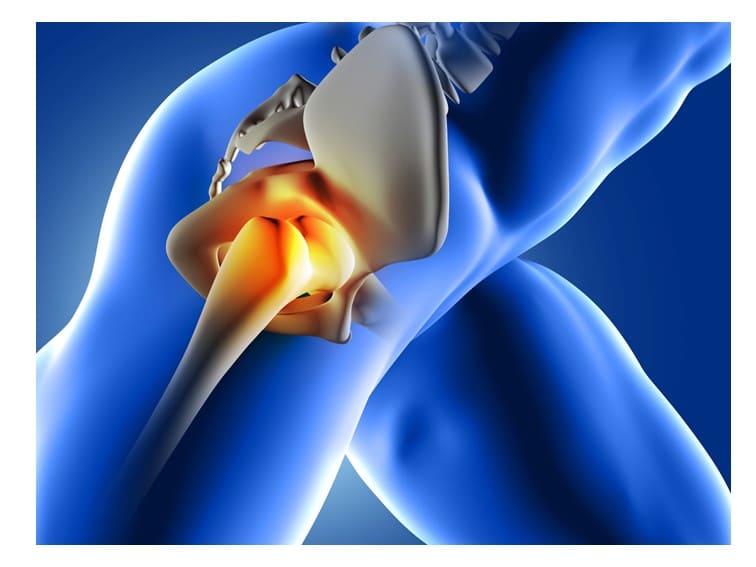
Osteoarthritis of the Hip Joint
A hip joint is a ball and socket joint. It has a ball at the top of the thigh bone that fits into a socket in the pelvis.
The ends of bones in a typical joint are covered by cartilage (a smooth slippery surface). This smooth but tough cartilage surrounding the bones’ end help in the smooth movement of the bones against each other preventing friction. The cartilage within the joints acts like a shock absorber.
Joints naturally experience wear and tear throughout our lives due to normal aging, overuse, injury, or other factors. As a result, the cartilage in the hip joint can become thin, while the bone surfaces can become rough. Consequently, these changes may cause pain, swelling, and joint stiffness. This condition is known as osteoarthritis of the hip joint.
Although arthritis has many forms, osteoarthritis most commonly affects the hip and knee joints. In addition, doctors also call osteoarthritis degenerative arthritis or age-related arthritis. Generally, it affects older adults, and in particular, women may experience it more often than men.
What Happens If You Have Osteoarthritis of the Hip?
If you have this condition, you may feel pain in different areas, such as the thigh, buttocks, groin, or knee. In addition, you may experience sharp or stabbing pain or, sometimes, a dull ache. Furthermore, your hip may feel stiff, especially after periods of inactivity.
What Are the Symptoms of Osteoarthritis of the Hip Joint?
If you have osteoarthritis, you may experience the following symptoms:
- Pain, tenderness, or swelling in the hip joint
- Joint stiffness, especially after sitting for a long time
- Stiffness while getting out of bed, particularly in the morning
- Crunching sound in the joint
- Difficulty in moving the hip joint to perform routine activities
Arthritis Causes
- A family history (genes) inherited from parents
- Excess body weight (obesity or overweight)
- Heavy lifting
- Professions involving long periods of standing
- Deformity in the hip joint
- Injuries
- Age 45 years or above
- Overuse of the joints
- Repetitive stress and mechanical overload
- Hip fracture or hip trauma
- Hip dislocation
Diagnosis of Hip Osteoarthritis
Your doctor performs a physical examination, takes your medical history, and checks the mobility of your hip joint. Your doctor may order an X-ray. The X-ray of the hip joint shows spurring of joint margins and narrowing of the joints (thinning of cartilage in the joints) and joint space narrowing if you have osteoarthritis of the hip joint.
Management of osteoarthritis
Your orthopedic doctor, physiotherapist, occupational therapist, and dietician form a multidisciplinary team to effectively manage your condition. The management approach varies according to the stage and severity of the condition. Customized exercise programs, weight reduction methods, activity restrictions, balance training, and medications are included in a typical management program.
If these approaches do not offer any relief, as seen in most severe cases, total hip replacement surgery is recommended.
Learn more about Robotic Hip Replacement
Bottom Line
Osteoarthritis of the hip may progress to the point where you may need joint replacement. Early diagnosis and prompt management of the condition can help in preventing progressive degeneration of the cartilage and delaying surgery.
