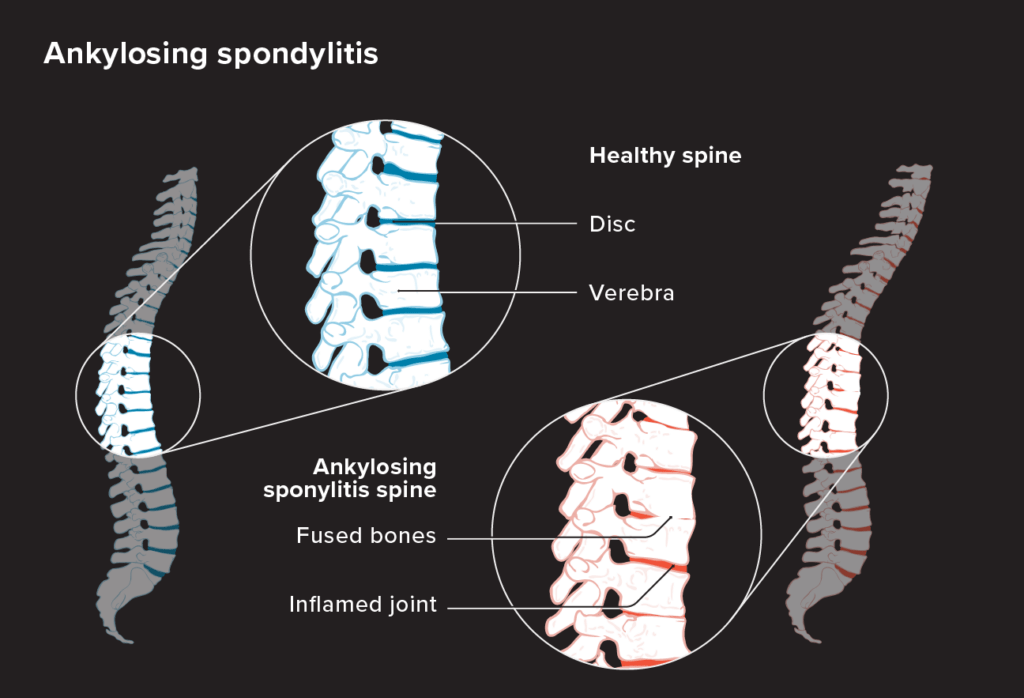
Ankylosing Spondylitis (AS) is a chronic inflammatory disease that primarily affects the spine and sacroiliac joints. As a result, it can cause pain, stiffness, and, in some cases, severe disability. In addition, AS can affect peripheral joints such as the knees, ankles, and hips. Therefore, understanding the symptoms, causes, diagnosis, and treatment options can help people manage the condition more effectively.
What is Ankylosing Spondylitis?
Ankylosing Spondylitis, often abbreviated as AS, belongs to a group of rheumatic diseases called spondyloarthritis. The term “ankylosing” refers to fused bones, while “spondylitis” refers to inflammation of the vertebrae or spinal bones.
AS primarily affects the spine and causes inflammation in the vertebrae. Over time, this inflammation can cause the spinal joints to fuse. Consequently, the spine can become stiff, less flexible, and more difficult to move. As a result, some people may find everyday activities increasingly challenging.
Symptoms and Diagnosis
Symptoms of Ankylosing Spondylitis
The symptoms of AS can vary from person to person. However, several symptoms commonly occur, including:
Chronic Pain: Persistent pain and stiffness can affect the lower back and buttocks, including the hip region. Typically, the pain becomes worse after rest and improves with movement.
Stiffness: Morning stiffness or stiffness after prolonged periods of inactivity can last for more than 30 minutes. Therefore, some people may find it difficult to move comfortably after waking up or sitting for a long time.
Fatigue: General fatigue and tiredness can occur because of the inflammatory process. In addition, ongoing symptoms can affect energy levels and daily activities.
Reduced Mobility: AS can make it difficult to bend or twist the spine. As a result, the condition can gradually limit the spine’s range of motion.
Other symptoms: People with AS may also experience tiredness, joint swelling, hip or thigh pain, neck pain or stiffness, and pain or stiffness around the ribcage. In addition, some people experience pain that becomes worse in the morning or after sitting for a long time. Foot, heel, or hand pain can also occur.
Causes and Risk Factors
The exact cause of Ankylosing Spondylitis remains unclear. However, researchers believe that a combination of genetic, environmental, and immunological factors contributes to its development.
In particular, the HLA-B27 gene has a strong association with AS. Nevertheless, having the HLA-B27 gene does not necessarily mean that a person will develop the condition.
Risk Factors
Several factors may increase the risk of developing AS. These include:
Genetics: A family history of AS or related conditions can increase the likelihood of developing the disease.
Age: AS typically begins during late adolescence or early adulthood. However, the condition can develop at other ages as well.
Gender: Men are more likely to develop AS than women, although the reasons for this difference remain unclear.
Diagnosis and Treatment
Diagnosing AS can sometimes prove challenging because its symptoms overlap with those of other conditions. Therefore, healthcare professionals usually consider several factors before confirming a diagnosis.
These factors include your medical history, physical examination, imaging studies such as X-rays and MRI scans, and laboratory tests. Together, these assessments help healthcare professionals evaluate the condition and determine an appropriate treatment approach.
Ankylosing Spondylitis Treatment in Hyderabad
Although Ankylosing Spondylitis has no cure, several treatments can help manage symptoms and improve quality of life. Depending on the individual’s condition, treatment may include medications, physical therapy, and lifestyle modifications.
Medications: Doctors may recommend nonsteroidal anti-inflammatory drugs (NSAIDs) to reduce pain and inflammation. In addition, they may prescribe disease-modifying antirheumatic drugs (DMARDs) or biologic therapies to target specific components of the immune system.
Physical Therapy: A structured exercise program can improve flexibility, strength, and posture. Furthermore, regular physical therapy can help maintain mobility and reduce the impact of stiffness.
Lifestyle Modifications: Maintaining a healthy lifestyle can also support overall management. For example, eating a balanced diet, quitting smoking, maintaining good posture, and practicing appropriate body mechanics can contribute to better physical function.
Surgical Interventions
In severe cases, conservative treatments may not provide enough relief. When this happens, an orthopedic surgeon may recommend surgery to address significant structural problems.
For example, spinal fusion surgery can help stabilize and realign the spine. In addition, during a spinal osteotomy, your orthopedic surgeon realigns the vertebrae to help you stand more upright.
During a laminectomy, your spinal surgeon removes part of a vertebra to relieve pressure on the spinal cord. Furthermore, if AS causes severe damage to the hip joint, your orthopedic doctor may recommend hip replacement surgery.
Living with Ankylosing Spondylitis
Living with Ankylosing Spondylitis can be challenging. However, understanding the condition and following an appropriate management plan can help you maintain mobility and manage symptoms.
Coping Strategies
Education: Learning about AS and its management options can help you take a more active role in your care. As a result, you may feel better prepared to discuss treatment decisions with your healthcare team.
Support Networks: Support groups and connections with other people living with AS can provide emotional support and practical advice. In addition, sharing experiences can help you manage some of the everyday challenges associated with the condition.
Self-Care: Prioritizing adequate rest, stress management, exercise, and relaxation techniques can support overall well-being. Furthermore, maintaining healthy daily habits can help you manage symptoms more effectively.
Bottom Line
Ankylosing Spondylitis is a complex inflammatory condition that can significantly affect mobility and quality of life. However, appropriate management can help people control symptoms and maintain function. Therefore, understanding the symptoms, causes, diagnosis, and treatment options can help you take proactive steps toward managing AS.
Ultimately, your treatment should match your symptoms, disease severity, and individual needs. If you experience persistent back, hip, or joint pain and stiffness, consult a qualified healthcare professional for an appropriate evaluation.
