Foot drop treatment | Dr. Praharsha Mulpur
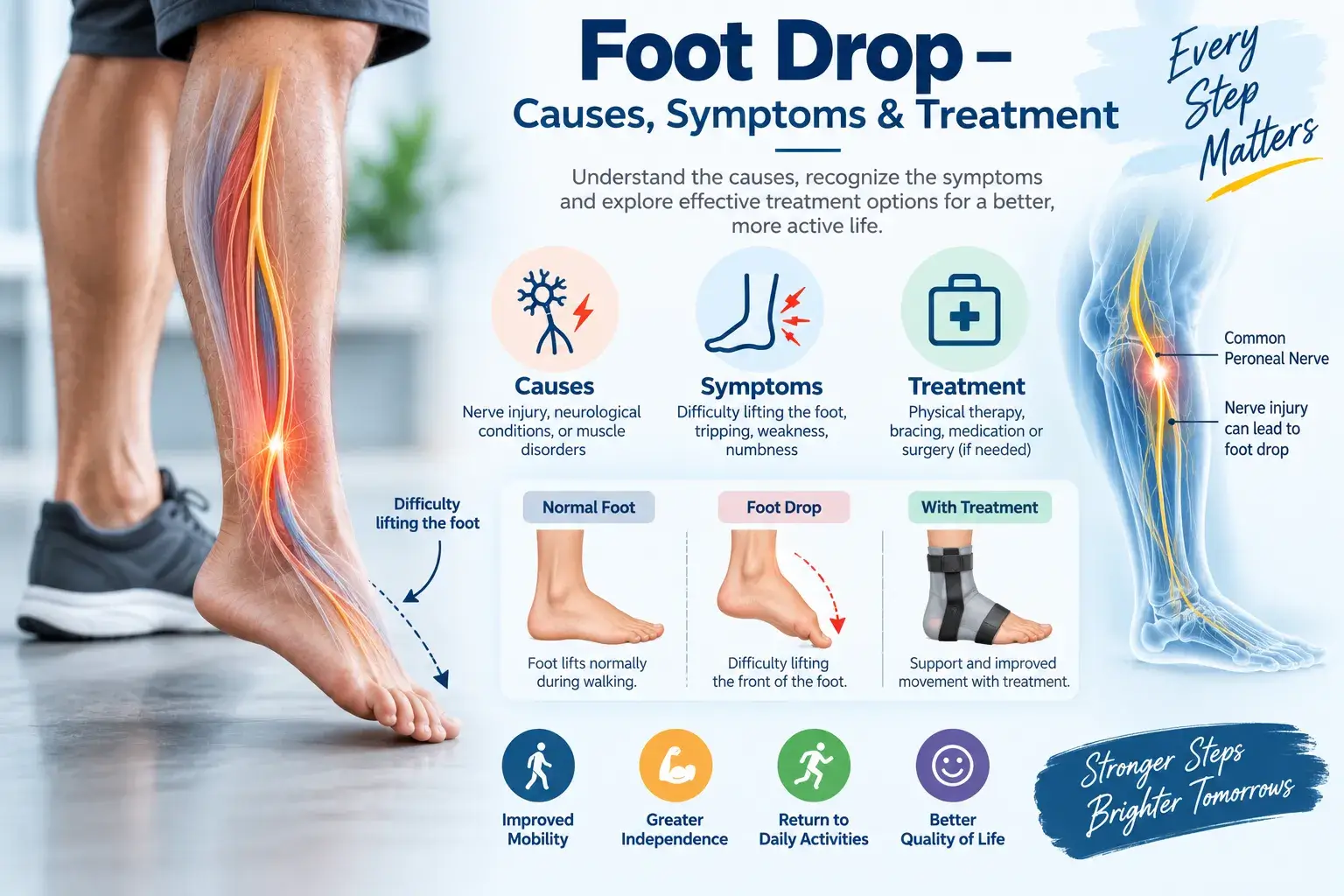
Foot drop is a medical condition that is not commonly encountered in primary care settings. There are various causes of foot drop. A thorough neurological examination, along with tests such as metabolic work-up, EMG/NCS, and imaging, typically helps in determining the correct diagnosis and appropriate treatment. Having a good understanding of the anatomy and physiology is crucial for arriving at an accurate diagnosis and managing the condition effectively. The purpose this information is to review the assessment, underlying mechanisms, and treatment options for foot drop, emphasizing the importance of a collaborative healthcare team in evaluating, managing, and potentially treating patients who present with foot drop symptoms.
Causes of foot drop
A knee injury has the potential to cause damage or compression of the peroneal nerve, which is responsible for controlling the muscles that lift your foot. It’s possible for this nerve to sustain damage during hip or knee replacement surgeries, albeit infrequently. Foot drop can also result from a pinched nerve or nerve root injury in the spine, which is more common among individuals with diabetes.
Foot drop can be attributed to various brain conditions, which include multiple sclerosis (MS), stroke, cerebral palsy, and Parkinson’s disease. Motor neuron disorders like polio, spinal muscular atrophy, and amyotrophic lateral sclerosis (also known as Lou Gehrig’s disease) can also result in foot drop. In rarer cases, muscle conditions such as muscular dystrophy or myositis can lead to foot drop. It’s important to note that individuals with these conditions typically experience additional muscular and/or neurological symptoms alongside foot drop.
Yoast is flagging the same sentence opening, so simply adding transition words isn’t the best fix. We should vary the sentence structure.
Use this:
Foot Drop Symptoms
Foot drop can lead to difficulties in walking because it makes lifting the front part of the foot difficult. As a result, you may find it harder to walk normally or maintain proper foot movement. In addition, some people may notice changes in their gait as they compensate for the difficulty lifting the foot.
Foot Drop Diagnosis
This removes the repetitive sentence openings and creates a smoother transition into the diagnosis section.
A nerve compression or a mass or excessive growth in the spinal canal or compression of a nerve in the knee due to a cyst or tumor can cause foot drop. X-rays helps in detecting bone growths or soft tissue masses. Doctors also recommend ultrasounds to detect cysts or tumors. In addition, to get detailed images of internal structures of soft tissues and bones, doctors use MRI test.
Foot Drop Treatment
The treatment for foot drop varies depending on its underlying cause, and early intervention can enhance the chances of recovery. Treatment options may include the following:
-
Here is the active-voice version, with the passive constructions removed while keeping your meaning:
-
Lightweight braces: Doctors commonly use these braces to support the leg and improve stability.
-
Shoe inserts (orthotics): You can use shoe inserts to improve foot alignment and function.
-
Physical therapy: A physical therapist can use exercises and techniques to strengthen the foot and leg muscles. As a result, these exercises may improve your ability to walk. In some cases, electronic devices that stimulate the leg nerves during walking may also help.
-
Surgery: In some cases, your doctor may recommend surgery to repair or decompress a damaged nerve. If foot drop becomes permanent, surgeons may fuse the foot and ankle joint or transfer tendons from stronger muscles to improve gait and stability.
-
Foot drop Treatment (exercises)
Several exercises can help alleviate symptoms and improve mobility for individuals with drop foot. Here are some examples:
Assisted toe raises:
- Position your affected foot on top of the non-affected foot.
- Utilize your non-affected foot to lift the affected foot upwards and then slowly lower it down.
- Repeat this motion around 10-15 times.
Ankle abduction and adduction:
- While seated, cross your affected leg over the non-affected leg.
- Place your hand on the toes and gradually move the foot up and down, ensuring that the ankle remains perpendicular to the floor.
- Repeat this exercise approximately 10 times.
Single leg stands:
- Hold onto the back of a chair for support and attempt to stand on your affected leg for 10-15 seconds at a time.
Ankle eversion and inversion:
- Keep your affected foot on the ground, lift the outer edge of the foot up, and then lower it down slowly.
- Next, try lifting the inner edge of the foot and lower it gradually.
- Repeat each of these exercises 10 times.
Ankle dorsiflexion:
- While seated, cross your affected leg over the non-affected leg.
- Use your hand to slowly dorsiflex your foot by moving the toes back towards the shin.
- Repeat this movement around 10-15 times.
Bottom line
Foot drop poses a risk of tripping, as the toes may catch on the floor. To minimize the chances of falls and potential injuries, it is prudent to take precautions within the home environment. Seeking professional advice can contribute to reducing the risks associated with foot drop and promoting a safer living environment. If you notice that your toes are dragging on the ground while you walk or you experience foot drop, it’s essential to seek foot drop treatment from an orthopedic specialist. Certain activities such as leg crossing, prolonged kneeling, or wearing a leg cast can raise the risk of developing foot drop. Therefore, if you’re at risk of foot drop, it’s vital to take preventive steps to reduce the likelihood of developing this condition.
