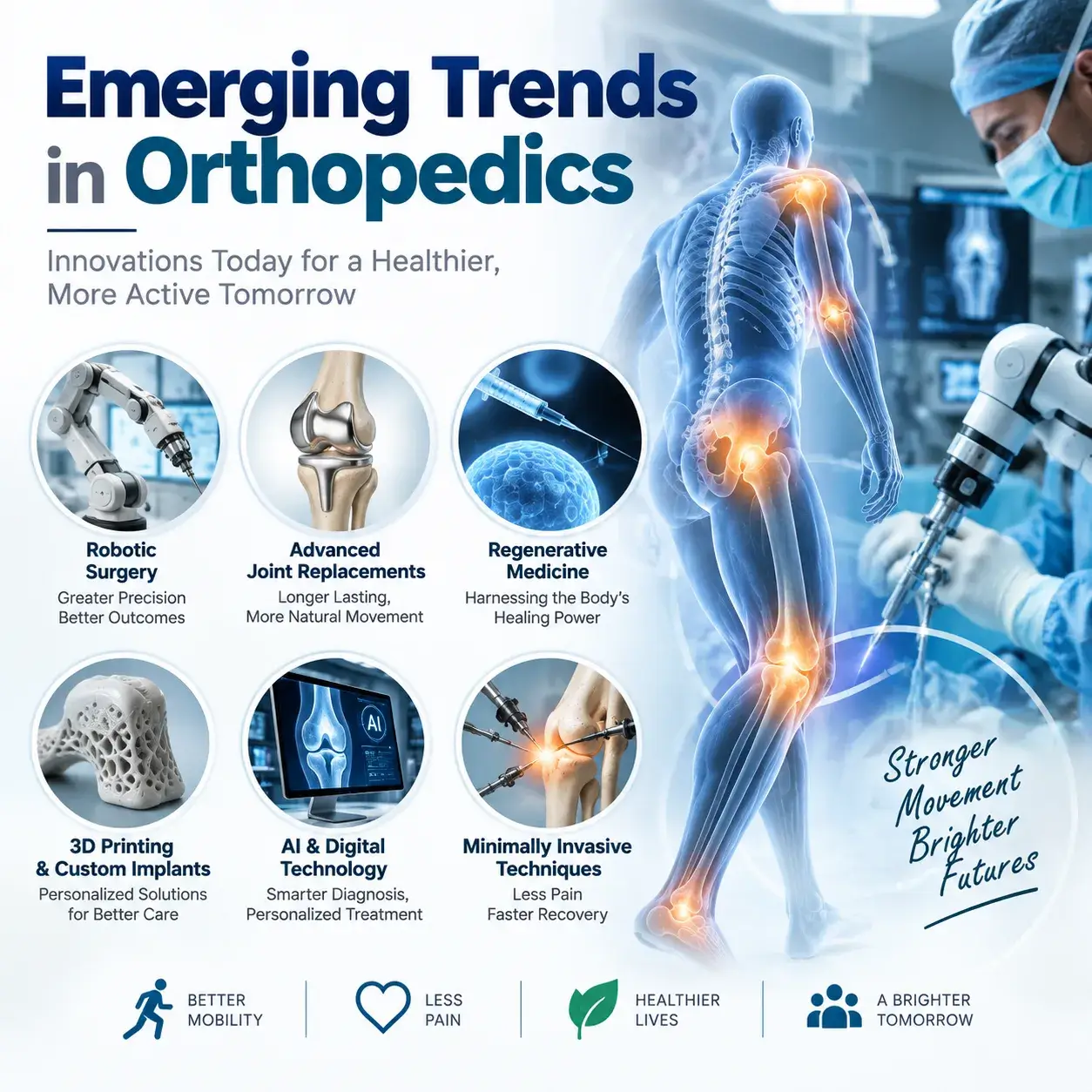
Robotic Orthopedic Surgery
Robotics is revolutionizing orthopedic surgery by providing amazing benefits to patients – such as minimal soft tissue damage, accurate positioning of the implant, a wide range of motion, and better stability of the joint.
The robotic arm is capable of controlling bone cuts by removing just enough bone with far better accuracy.
Accurate placement of implants using a robotic arm reduces future misalignment and repositioning. Surgical robots are more precise to do this job.
99% of patients feel complete satisfaction after robotic-assisted joint replacement surgery.
The robotic-assisted arm can perform many tasks including cutting and reshaping bones, positioning implants, guiding orthopedic surgeons in positioning sophisticated surgical instruments, and modeling joints in 3D.
Artificial Intelligence and Machine Learning in Orthopedics
Computers use a huge amount of data in real-time. They use this data to learn, adapt and improve (machine learning) and help deliver better orthopedic patient care.
AI helps accurately predict the surgical outcome of a procedure and, as a result, helps a robotic orthopedic surgeon plan appropriate post-operative care. In addition, machine learning models can accurately predict the outcomes of joint replacement surgeries.
Furthermore, AI-enabled tools can support remote patient monitoring (RPM) and remote therapeutic monitoring (RTM).
Benefits of Remote Therapeutic Monitoring (RTM)
Unlike remote patient monitoring, which measures physiological parameters, remote therapeutic monitoring measures non-physiological parameters such as pain levels and range of motion. As a result, patients can monitor their own health more effectively and engage more actively with their doctors, which may support better outcomes.
In addition, an AI-based remote therapeutic tool can use a mobile app and a smartphone camera to measure patient parameters such as range of motion and pain levels. Furthermore, doctors can set daily or weekly prompts that encourage patients to send personalized progress reports. Consequently, doctors can closely monitor patients’ progress and determine whether their recovery is progressing as expected.
Robotic Orthopedic Surgery Benefits in a nutshell
- Extremely high level of precision
- Smaller incisions and quicker healing time
- Patients can go back to work much sooner
- The risk of complications is minimal
- ROBOTIC JOINT REPLACEMENT
