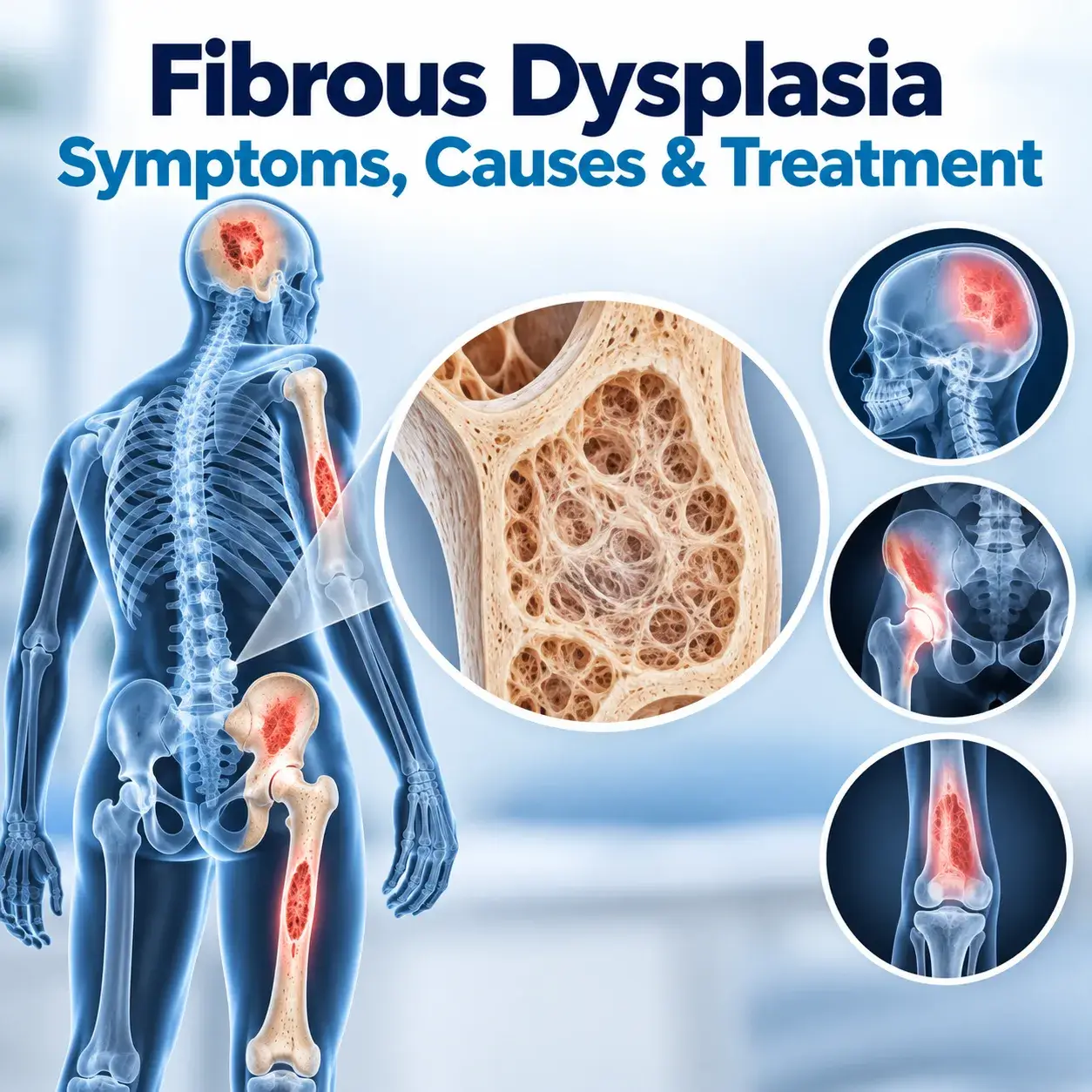
This is a type of bone condition wherein abnormal fibrous tissue develops in the normal bone replacing healthy bone tissue. This is a benign (noncancerous) bone condition. Over some time, fibrous tissue grows and spreads within the bone making it brittle and weak. A weak bone can become prone to fractures or deform.
In some people, the condition becomes severe affecting multiple bones and causing symptoms. Some people may experience a few or no symptoms at all.
When fibrous dysplasia becomes severe affecting multiple bones and causing severe symptoms, surgery becomes necessary to remove affected bones and prevent deformity or bone fractures.
Cause
Fibrous dysplasia is a rare genetic condition. It accounts for around 7% of all benign bone tumors. A gene mutation is responsible for making an abnormal type of fibrous bone.
Diagnosis
To diagnose this condition, your orthopedic doctor will take into account your medical history and overall health and ask you about your symptoms. The doctor will order X-rays and other tests to confirm the diagnosis of fibrous dysplasia.
X-rays – In a typical case of fibrous dysplasia. An X-ray may show:
Bone deformity – abnormal curvature or bowing
Expansion of affected bone
Abnormality in the affected bone
MRI or CT scan
An orthopedic doctor may order an MRI or a CT scan to further evaluate the lesion. An MRI scan clearly shows the extent of bone involved. It helps determine whether the lesion has turned cancerous.
A CT scan can help your doctor see the fracture better and determine the quality of the bone.
Bone scan: This scan helps in detecting additional lesions and abnormal bone structures in the body.
Treatment
Medications: Doctors prescribe medications and pain relievers to offer relief from pain and to decrease the frequency of fractures associated with weak bones.
Observation: If the condition doesn’t cause any symptoms, your orthopedic doctor may recommend monitoring and observation during regular follow-up consultations to check whether the condition is progressing.
Surgical treatment
Fibrous dysplasia is a progressive bone condition. It causes severe pain, weak bones, abnormal growths, and bone deformity. Your orthopedic doctor may recommend surgery to prevent bone fractures when you have progressive deformity of the bone; cracks in the bone; symptomatic lesions; displaced fractures; large lesions and lesions that have become cancerous.
Your orthopedic doctor scrapes a benign tumor out of the bone using a surgical procedure called Curettage to treat fibrous dysplasia.
