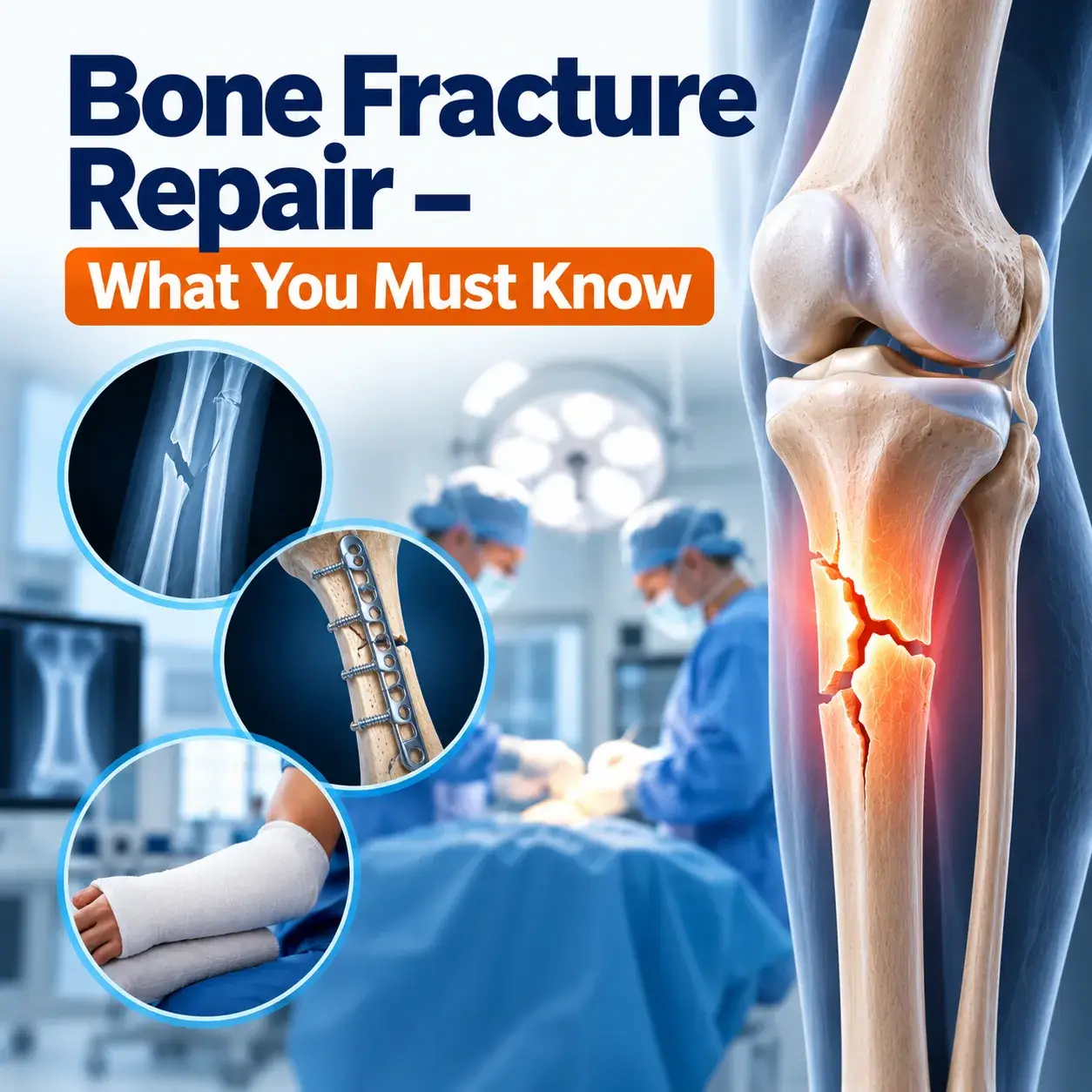
Fracture and dislocation: A fracture occurs when the bone is broken. It requires medical care. If a person sustains severe injuries or trauma with broken bones, then call your local emergency number. Also, seek immediate emergency medical care if the joint or the limb appears deformed with severe pain. In general,fracture and dislocation can happen after falls, accidents, sports injuries, or other trauma.
A fracture is a break, crack, or chip in a bone, and fractures can vary widely in severity depending on the injury and the bone involved. The American Academy of Orthopaedic Surgeons (AAOS) guide to fractures explains the different types of fractures, common symptoms, causes, diagnosis, and treatment options.
A ‘closed’ fracture occurs when the person’s skin is unbroken and there is no cut.
An ‘open’ fracture occurs when a person’s bone cuts through their skin.
Dislocations occur when bones are pulled out of their proper place or joints.
How Can You Help With Fractures and Dislocations?
First aid for a fracture and dislocation should focus on keeping the injured area still and getting medical help. In case of a bone fracture and dislocation, don’t move the affected person – otherwise, the person may suffer further injury.
Please note knowing the signs of a fracture and dislocation can help you respond appropriately.
Fractured thigh
The thigh is the portion of your leg above the knee.
The thighbone (femur) is a big bone with the potential for catastrophic fracture.
If you encounter a thigh fracture, call an emergency service or an ambulance right away immediately.
Fractured face or jaw
If there is a cut, apply pressure to the lesion with a clean towel to stop the bleeding. (Do not push on the injury.)
If the person is cognizant, allow them to relax in a position that is comfortable for them.
If the individual is unconscious but breathing regularly, place them on their side with their chin inclined up and mouth facing the ground (the recovery position).
A fractured arm, wrist, or collarbone
If there is a cut, apply pressure to the lesion with a clean towel to stop the bleeding. (Don’t press on the injury.)
Place the person in a posture that is comfortable for them and hold them still.
Use a cushion or folded cloth to support the individual’s arm.
Create a sling to support their arm.
Fractured ribs and Chest Injuries
Place the person in a posture that is comfortable for them and hold them still.
Arrange for the individual to visit a hospital or a doctor as soon as possible.
Fractured ankle
It is difficult to determine whether an ankle is broken or twisted. If you’re unsure, try the following (R.I.C.E):
REST:
Make the individual comfortable and let him or her remain still.
ICE:
Apply ice wrapped in a towel or something extremely cold to the ankle (to minimize edema).
COMPRESSION:
Wrap the ankle with a clean elastic bandage that is not too tight.
ELEVATION:
Prop the ankle up with a cushion or folded garments below.
Dislocated shoulder
Keep the person motionless and comfortable.
Wrap a large amount of soft material (bandage or fabric) around their hand or fingers.
Make a sling to support their hand, but take care not to contact their hand or fingers when tying the knot.
For toes, lie the sufferer down and place a cushion or folded cloth beneath their feet. Apply ice wrapped in a towel or something very cold to their toes (to reduce edema).
How can you help with Dislocations?
Put ice or cold compresses around the dislocated joint to reduce swelling and build-up of fluid around the injured joint.
Don’t move the dislocated joint and don’t try to put it back in its normal position. If you try to force the dislocated portion back into place, it will damage soft tissues – blood vessels, nerves, ligaments, and muscles surrounding the joint.
